
Chimney Liner Installation in Greenvale, NY
A chimney liner is the continuous conduit running inside your chimney that carries combustion gases safely out of the home and protects the surrounding masonry from heat and corrosive byproducts. Without an intact liner, those gases including carbon monoxide can seep through cracks into living spaces, and the intense heat from a flue fire can reach wood framing within seconds. If your liner is cracked, missing, or simply the wrong size for your current heating appliance, chimney liner installation corrects the problem before it becomes a house fire or a health emergency.
At America’s Chimney Experts, we handle liner installations for homeowners across Greenvale and the surrounding Nassau County communities every week. The work is specific: the liner material, diameter, and installation method all depend on what you’re venting and the condition of the existing flue. This page explains exactly what that process looks like at your home.
The Situation that Usually Brings People to Us
Most Greenvale homeowners don’t call about a liner until something prompts them to a Level 2 inspection after buying a home on one of the older streets off Glen Cove Road, a new gas insert that the HVAC contractor said needs a relining, or a Level 1 inspection that flagged a cracked terra-cotta tile flue. Older homes in this area, many built in the mid-20th century, were constructed with clay tile liners sized for oil-burning systems. When those systems get replaced with high-efficiency gas appliances, the original liner is almost always too large, which causes excessive condensation, accelerated deterioration, and a buildup of acidic flue gases inside the masonry.
The other common scenario is a chimney that had no liner at all. Before 1950, unlined masonry chimneys were standard practice. The National Fire Protection Association’s NFPA 211 standard now requires a liner on every working chimney, and for good reason: an unlined flue transfers heat to combustible framing up to nine times faster than a properly lined one.
What Chimney Liner Installation Actually Involves
The process starts with a camera inspection of the existing flue. We run a closed-circuit video camera from the crown to the firebox opening to assess the exact dimensions, the condition of any existing liner material, any offsets in the flue path, and the overall integrity of the masonry. That inspection drives every decision that follows.
From there we determine the right liner type:
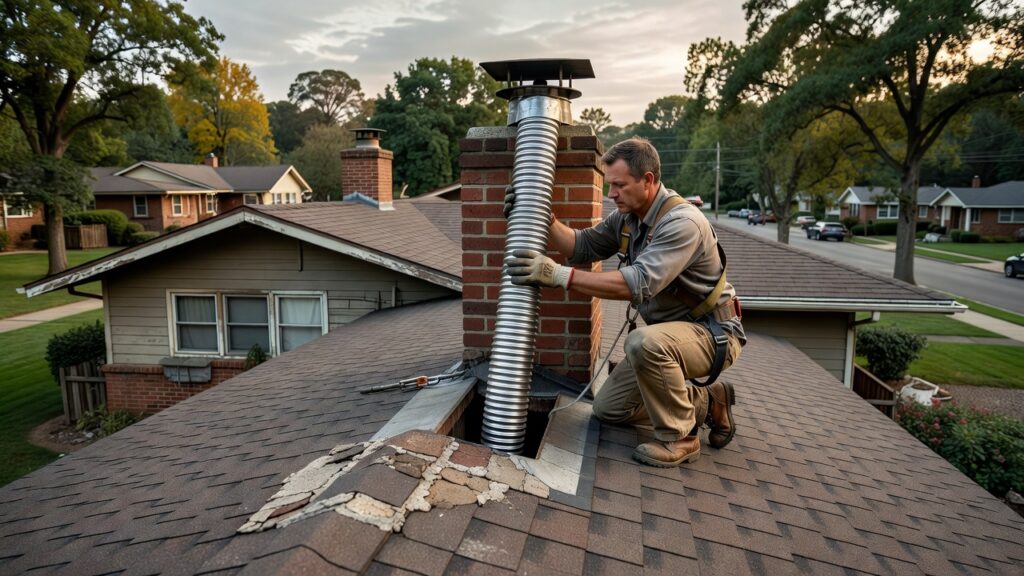
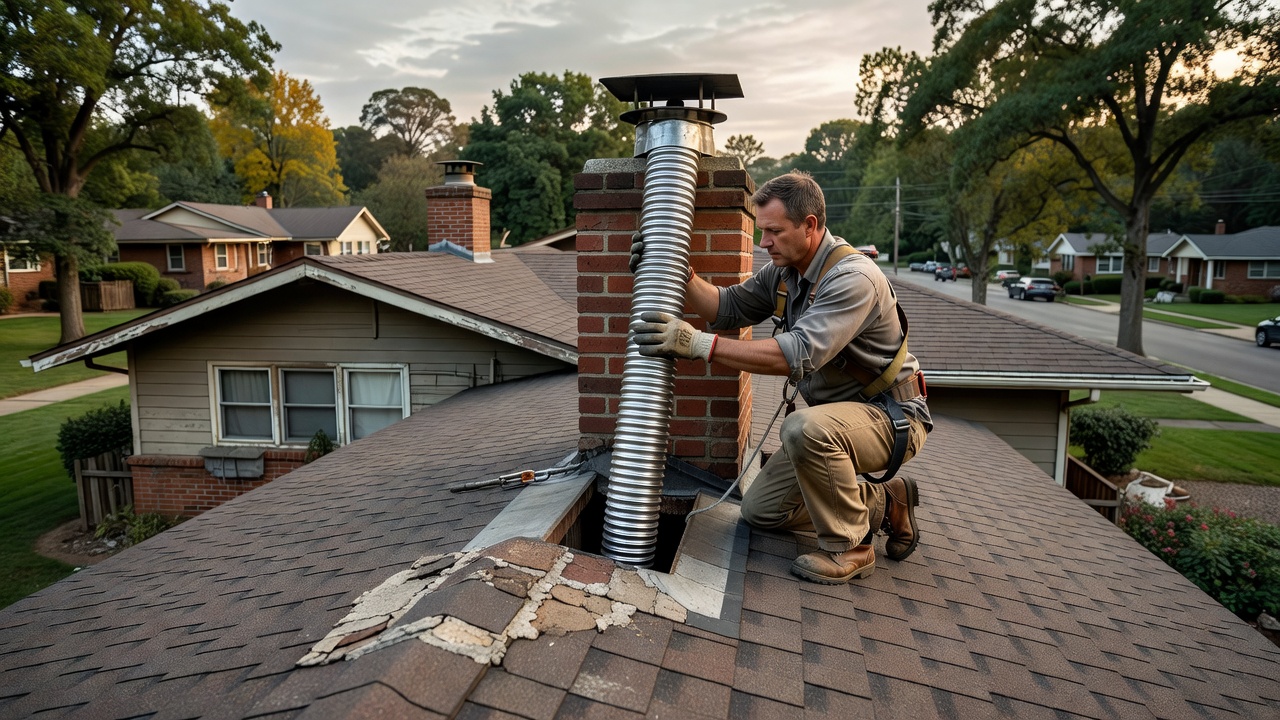
- Flexible stainless steel liner — the most common choice for gas appliances and oil furnaces, and the only practical solution when the flue has one or more offsets. We use corrugated 316L-grade stainless on gas applications and 304 on oil. The liner is measured, cut to length, fitted with a top plate and a connector at the base, and insulated where required by the appliance manufacturer or local code.
- Rigid stainless steel liner — used on straight flues where a smooth interior surface offers a performance advantage, typically on wood-burning fireplaces with high draw requirements.
- Cast-in-place liner — a poured refractory system applied to the interior of the existing masonry. This is well-suited for older unlined chimneys or badly deteriorated clay-tile flues where the masonry structure itself is still sound. The finished product is a seamless, insulating liner that actually adds structural strength to the chimney.
Once the liner is in place, we seal the top plate at the crown and make the connection at the appliance collar airtight. Before we leave, we verify draft performance and do a visual check of the full assembly. Any work that touches a gas appliance also gets coordinated with proper appliance reconnection protocol we don’t leave a half-finished job.
What’s Included in Every Installation
- Pre-installation camera inspection of the existing flue
- Liner sizing calculation based on your specific appliance’s BTU output and the measured flue height
- Full liner assembly (liner body, top plate, storm collar, connector piece)
- Insulation wrap where code or appliance specs require it
- Crown sealing or repair if the existing crown shows deterioration
- Post-installation draft check
- Written documentation of the completed installation, which you’ll want on file for insurance and resale purposes
Why the Liner Size Calculation Matters more than People Expect
An oversized liner is just as problematic as a deteriorated one. If the cross-sectional area of the liner is too large for the connected appliance, flue gases cool before they exit, water condenses on the liner walls, and creosote accumulates faster on wood-burning systems. The calculation uses the appliance’s BTU input, the height of the flue, and whether the system connects one or two appliances. We do this math on every job, not just the ones where the original liner was clearly the wrong size. A liner that’s a half-inch too small in diameter can restrict draft enough to cause backdrafting on certain high-efficiency units.
Greenvale and Nassau County Specifics
Nassau County follows the New York State Uniform Fire Prevention and Building Code, which adopts NFPA 211 and the International Fuel Gas Code for liner standards. Permits are required for liner installations in most Nassau County municipalities, and we handle the permit coordination as part of the job. If you’re in an incorporated village within or adjacent to Greenvale, the process may involve a separate village building department; we’ve done this enough times in the area to know which offices to call and what they typically need.
The clay tile flues in older Greenvale homes present a particular challenge: the tiles were often laid with lime-based mortar joints that have since deteriorated, leaving gaps between tiles even when the tiles themselves look intact on camera. A liner installation seals that issue permanently, regardless of whether you’re switching appliance types or staying with the same fuel.
Frequently Asked Questions About Chimney Liner Installation
My home inspection in Greenvale said I have a “deteriorated flue liner.” Do I need a full replacement or can it be repaired?
It depends on the extent of the damage. Minor spalling on individual clay tiles can sometimes be addressed with a refractory repair mortar applied through a camera-guided process. But if the tiles are cracked through, offset, or if there are multiple failed sections throughout the flue height, a full liner installation is the more reliable and cost-effective solution. A camera inspection gives us a clear answer before any work begins.
We just had a gas insert installed by an HVAC company. They mentioned something about relining is that actually necessary?
Yes, in most cases it is. A gas insert typically vents through a 4-inch or 5-inch flexible liner that runs inside the existing masonry flue. The insert manufacturer requires this, and so does code. The existing clay tile flue, which may be 8 inches or larger, cannot be used directly; it’s too large, and combustion products would cool and condense inside it. If the HVAC company installed the insert but didn’t address the liner, the installation is likely incomplete and may not pass inspection.
How long does a stainless steel liner last, and does it need maintenance after installation?
A 316L stainless liner on a gas appliance, properly sized and installed, is rated to last 20 years or more under normal use. A 304 stainless liner on an oil system typically carries a similar rating depending on the sulphur content of the oil. The liner itself doesn’t require annual replacement, but it does need to be swept and inspected annually, just like any other part of the chimney system. Condensate and creosote (on wood systems) still accumulate on the liner walls and need to be removed to maintain proper draft and liner integrity.
Schedule Your Chimney Liner Installation in Greenvale
If you’ve had an inspection report flag your flue, just switched heating appliances, or aren’t sure whether your older Greenvale home even has a functional liner, the right starting point is a camera inspection. We’ll give you a clear picture of what’s there and a straight answer about what it needs. Call America’s Chimney Experts or submit a request through our contact form to book an appointment. We serve Greenvale and the broader Nassau County area, and most inspection and installation slots are available within the week.
Related from America’s Chimney Experts: Chimney Sweep Services in Greenvale, NY · Chimney Inspection in Greenvale, NY · Chimney Repair in Greenvale, NY — Fix It Before Winter Finds the Crack