
Published October 28, 2026
Chimney Inspection Old Brookville, NY: What Happens When You Skip It
Old Brookville homeowners tend to be conscientious about their properties. The estates here are substantial, the fireplaces are often original to the home, and the winters along this stretch of Nassau County are hard enough on masonry that what looks fine from the living room can be a real problem inside the flue. A chimney inspection in Old Brookville, NY is not a formality. It is the only way to know what is actually happening inside a system you cannot see.
Below are the questions we hear most often from homeowners in Old Brookville, Brookville, Upper Brookville, Locust Valley, and Glen Head. We have answered each one as plainly as we can.
Safety, Risk, and What Getting a Chimney Inspection in Old Brookville, NY Actually Tells You
How dangerous is it to use a fireplace that has not been inspected in over a year?
Quick answer: Meaningfully dangerous, especially in a home with an older flue liner.
A single season of wood burning can deposit enough creosote to sustain a chimney fire, and you may never hear it happen. According to the Insurance Institute for Business and Home Safety, chimney fires can reach internal temperatures exceeding 2,000°F, enough to crack flue liners and ignite surrounding structural materials in as little as minutes. In Old Brookville, many of the older colonials and Tudors were built with clay tile liners that are now decades old. A hairline crack in that liner, invisible without a camera, lets those temperatures and combustion gases reach the framing around your firebox. The National Fire Protection Association reports that failure to clean chimneys is the leading contributing factor in home heating fires, accounting for 30% of all such fires (NFPA Report on Home Fires, 2023). One missed inspection is how that statistic is made.
What does a chimney inspection in Old Brookville, NY actually include?
Quick answer: At minimum, a visual check of every accessible component. A thorough inspection also includes a camera scan of the flue.
When our technicians arrive at a property in Old Brookville, we start at the roofline and work down. We check the crown, the flashing, the mortar joints between bricks, the damper operation, the firebox condition, and the smoke chamber. That is the Level 1 scope defined by NFPA 211. A Level 2 inspection, which the NFPA 211 standard requires after any chimney event or when a home changes hands, adds a video scan of the flue interior. That camera run is where we find the things that cause fires: stage-two or stage-three creosote deposits, cracked tiles, displaced liner sections, and blockages from bird or animal nesting. If you have not had a camera inspection done, a visual check alone is not enough to confirm the flue is safe.
What is creosote and why does it matter so much?
Quick answer: Creosote is the combustible residue left behind by wood smoke, and in its third stage it is the primary fuel in chimney fires.
According to the Chimney Safety Institute of America, creosote accumulates in three stages, with third-degree glazed creosote being the most dangerous and the primary fuel source in chimney fires. Stage one is a light, flaky deposit that sweeping removes easily. Stage two is a harder, tar-like coating that requires rotary cleaning tools. Stage three is a thick, shiny glaze that is extremely difficult to remove and, if it ignites, burns at temperatures that destroy masonry and steel liners. Homeowners in Old Brookville who burn hardwoods like oak, which is common here, produce less creosote per cord than those burning softer woods, but even hardwood fires accumulate deposits over time. The only way to know which stage you are dealing with is to look inside the flue.
What happens if I skip an inspection and there is a hidden crack in the liner?
Quick answer: Combustion gases, including carbon monoxide, can migrate into the living space or the wall cavity.
The U.S. Consumer Product Safety Commission estimates that carbon monoxide poisoning from faulty heating systems, including fireplaces and chimneys, sends more than 20,000 people to emergency rooms annually. A cracked flue liner does not always announce itself. The gap may be small enough that smoke drafts normally during a fire, but carbon monoxide, which is odorless, can still seep through. In older Old Brookville homes with plaster walls and original framing close to the firebox, a compromised liner also creates a fire path that bypasses the hearth entirely. We have found liner cracks on properties in Locust Valley and Glen Head that the homeowners had no idea about because the fireplace appeared to draw well. Drawing well is not the same as burning safely.
How does the climate here in Nassau County affect chimney condition?
Quick answer: Repeated freeze-thaw cycles and proximity to the Sound accelerate mortar and liner deterioration faster than inland climates.
Old Brookville sits close enough to Long Island Sound that salt-laden air is a real factor. Salt accelerates spalling in brick and deterioration in mortar joints. Combine that with the freeze-thaw cycling Nassau County sees between November and March, where temperatures can drop below freezing overnight and climb above it by midday, and you have conditions that work moisture into every small gap. Water expands when it freezes. Over years, that process pries apart mortar joints, heaves flashing, and fractures clay tile liners from the outside in. A chimney that looked structurally sound in late October can have new damage visible by February. Annual inspections catch that progression before it becomes a repair job that costs several times more than the inspection itself.
Can I inspect my own chimney instead of hiring a professional?
Quick answer: You can look at the firebox and the damper, but you cannot safely evaluate the flue, the liner, or the smoke chamber without equipment.
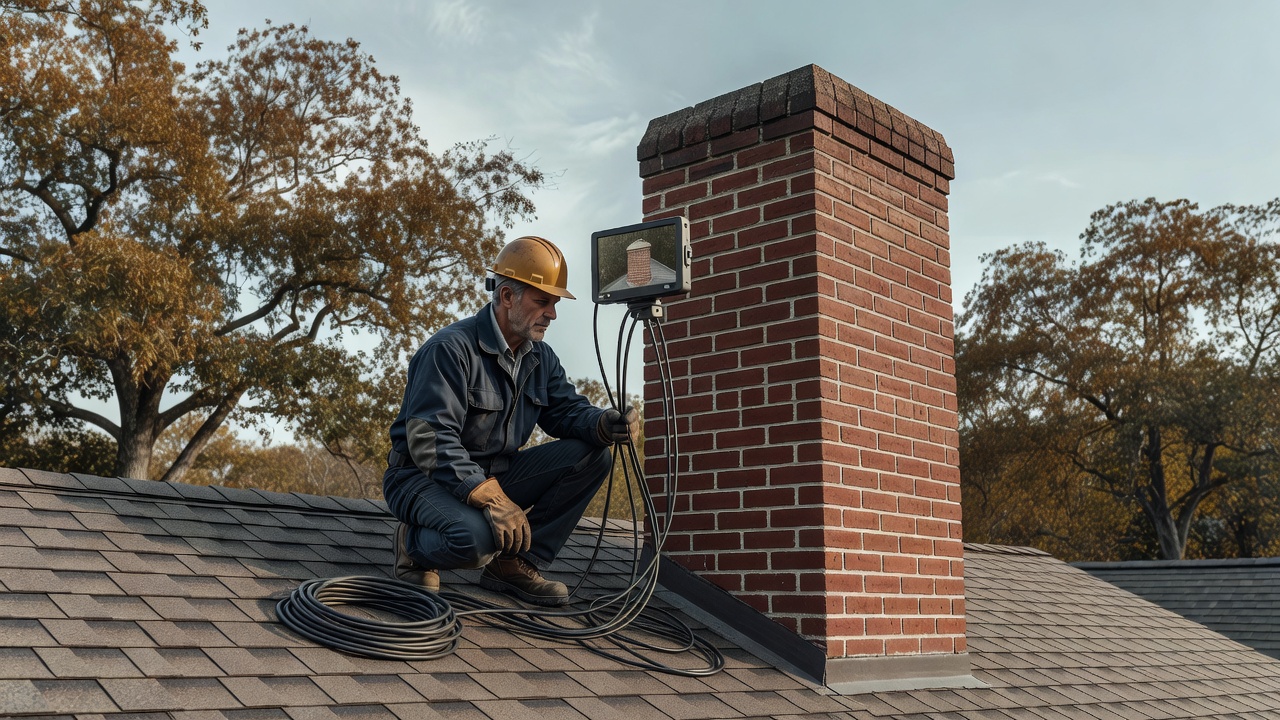
Homeowners often ask this, and the honest answer is that a flashlight and a mirror get you to roughly the smoke shelf, which is a small fraction of the system. The flue in a two-story Old Brookville colonial may run 25 to 30 feet from the firebox to the top of the chimney stack. You cannot see a crack in a tile three-quarters of the way up, you cannot measure creosote depth at the elbow above the smoke chamber, and you cannot assess flashing from inside the house. Our technicians use a camera system that sends a live image down the full length of the flue. That footage is also what we share with homeowners when we explain what we found. A DIY look-over is not a substitute for that.
What does a chimney inspection cost in Old Brookville, NY in 2026?
Quick answer: A Level 1 inspection typically runs between $100 and $250. A Level 2 inspection with video scanning generally falls between $250 and $450, depending on system complexity.
Pricing varies by the size of the chimney system, the number of flues, and roof pitch. A larger estate property in Old Brookville or Upper Brookville with a multi-flue system will cost more to inspect than a single-flue standard fireplace. What homeowners consistently underestimate is the cost of skipping it. A cracked liner that goes undetected for two or three seasons may require a full relining, which typically runs between $2,500 and $5,000 or more. A repoint job on badly deteriorated mortar can cost $800 to $2,000. The inspection fee is small relative to those repairs. We can outline a fair, itemized estimate before any work begins, and we keep no surprises in the final bill.
What is the situation that usually brings homeowners to us for a chimney liner installation?
Quick answer: Most homeowners call us after a Level 2 inspection reveals a cracked or deteriorated clay tile liner, often in a chimney that appeared functional.
The situation usually brings people to a chimney liner installation after an inspection turns up damage they did not expect. A tile liner in a home built in the 1960s or 1970s, common throughout Old Brookville and Brookville, has had 50-plus years of thermal cycling. Clay tile expands and contracts with each fire. Over time, the joints between tiles open. We find this regularly in homes where the fireplace has been used lightly, because even infrequent use over decades adds up. When the liner is gone or compromised, we install a stainless steel liner system sized to the appliance, which restores a safe, code-compliant flue. Our chimney liner installation service covers the full process, from sizing to installation to the final inspection. Chimney liner installation actually involves more than inserting a steel tube, it includes sealing the top, properly insulating where required, and connecting the liner correctly to the appliance below.
When is the best time to schedule a chimney inspection in Old Brookville?
Quick answer: Late summer or early fall, before heating season. August through October is when we can get to you quickly and you still have time to address anything found.
By November, our schedule fills. Nassau County homeowners light their first fires of the season and then call us, which means delays. Scheduling a chimney inspection in Old Brookville, NY in August or September means you get a prompt appointment, we have better access to the roof in dry weather, and if we find something that needs repair, masonry work can still be done before temperatures drop. Mortar and crown sealants need mild temperatures to cure properly. A repair identified in September can be completed before Thanksgiving. The same repair identified in December may have to wait until spring, which means a fireplace out of service all winter. Our chimney sweeping and inspection service can often be combined into a single visit, which keeps the cost and the disruption to one appointment.
What should I do if I bought a home in Old Brookville and the previous owner said the chimney was recently serviced?
Quick answer: Get an independent Level 2 inspection regardless of what the seller disclosed.
We have been called to properties in Oyster Bay and Locust Valley where a seller provided a sweeping receipt but the flue showed second-stage creosote deposits and a cracked tile that predated the last cleaning. A receipt for chimney sweeping is not the same as an inspection, and an inspection performed for the seller’s benefit may not have included a camera scan. The NFPA 211 standard specifies that a Level 2 inspection, including video scanning, is required whenever a home is sold. That standard exists because the new owner is the one who will be living with whatever condition the chimney is actually in. Before you light the first fire in a newly purchased Old Brookville home, have us run a camera through the flue. It is a $250 to $450 investment that tells you exactly what you are working with.
A Real Example From Our Service Area
A homeowner in Old Brookville called us in the fall of 2024 after purchasing an older colonial on a wooded lot. The sellers had provided a sweeping receipt from the prior spring. When we ran a camera through the flue, we found a section of clay tile liner that had separated at a joint roughly 18 feet up. The gap was wide enough to pass a finger through. The homeowner had no idea. We scheduled a stainless steel liner installation before the end of October. By the time the first cold snap arrived, the fireplace was safe to use. Had that homeowner skipped the inspection and taken the seller’s receipt at face value, they would have been burning wood with combustion gases venting into the wall cavity.
Ready to Schedule a Chimney Inspection in Old Brookville, NY?
Our technicians work throughout Old Brookville, Brookville, Upper Brookville, Glen Head, and the surrounding communities in Nassau County. We bring a camera to every inspection, we walk you through what we find, and we give you a written estimate before any repair work begins. If you want to know what condition your chimney is actually in, reach out to us through the contact form on our website and we will get you scheduled.
Summary: Key Facts at a Glance
| Question | Short Answer |
|---|---|
| How often should I get an inspection? | Once per year, per CSIA and NFPA 211 guidance |
| What does a Level 1 inspection cost? | Roughly $100 to $250 in 2026 |
| What does a Level 2 inspection cost? | Roughly $250 to $450, includes video camera scan |
| When is a Level 2 required? | After any chimney event, after a home sale, or after extended disuse |
| Can I inspect it myself? | Not the flue or liner. Professional camera equipment is required. |
| Best time to schedule in Old Brookville? | August through October, before heating season demand peaks |
| What does a missed crack in the liner risk? | Carbon monoxide intrusion and potential chimney fire |
| Does the local climate matter? | Yes. Salt air and freeze-thaw cycles accelerate masonry deterioration on Long Island. |
Frequently Asked Questions: Chimney Inspection in Old Brookville, NY
Does a chimney inspection in Old Brookville, NY include cleaning?
Not automatically. An inspection and a chimney sweeping are two separate services, though we frequently schedule them together in one visit. The inspection tells us what condition the flue and firebox are in. If sweeping is needed, we can do that the same day and quote both services together upfront.
How long does a chimney inspection take?
A standard Level 1 inspection takes roughly 30 to 45 minutes. A Level 2 inspection with a full camera scan of the flue typically runs 60 to 90 minutes, depending on the number of flues and the complexity of the chimney system. Larger estate homes in Old Brookville with multiple fireplaces will take longer.
What certifications should I look for in a chimney inspector?
Look for technicians certified by the Chimney Safety Institute of America (CSIA). CSIA Certified Chimney Sweeps are trained to NFPA 211 standards and are required to pass a written examination and maintain continuing education. That credential is the industry baseline for qualified inspection work.
My fireplace smells like smoke even when it is not in use. Is that a sign I need an inspection?
Yes. A persistent smoke odor when the fireplace is cold usually indicates a draft problem, a damaged damper, or creosote deposits in the flue absorbing humidity. All three warrant a professional look. In Old Brookville’s humid summers, creosote odor can become noticeable even months after the last fire.
Can a chimney inspection be done in winter?
Yes, we inspect chimneys year-round. The camera equipment works in any temperature. The one limitation is that masonry repairs identified during a winter inspection may need to wait for warmer weather, since mortar and sealant products require temperatures above freezing to cure correctly.
What happens if our inspection finds something serious?
We document everything we find with the camera footage and walk you through the results before we leave. If a repair is needed, we give you a written estimate with no obligation. You decide how to proceed. We do not pressure any homeowner into same-day decisions, and we are happy to explain what is urgent versus what can wait a season.
Related from America’s Chimney Experts: Chimney Repair in Greenvale, NY — Fix It Before Winter Finds the Crack