
Published November 4, 2026
Chimney Inspection in Greenvale, NY: What You Can Check Yourself and What Needs a Professional
Check whether the damper appears to open and close normally. If it is stuck, badly rusted, or visibly damaged, mention it to the inspector. Do not force a jammed damper or attempt to repair its frame yourself.
The exterior crown and chimney cap
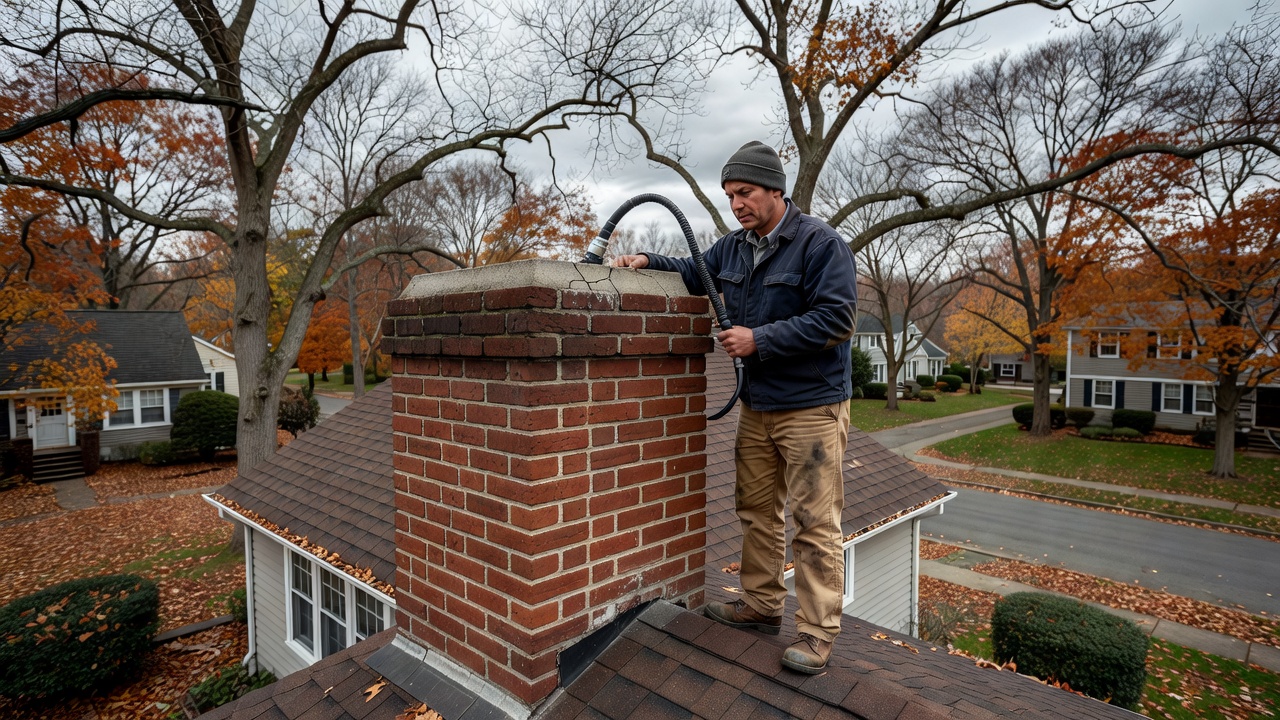
From a safe position on the ground, use binoculars to look at the visible chimney top. Check for obvious crown cracks, a missing rain cap, or a cap that appears loose or damaged.
A damaged crown or missing cap can allow water and debris to enter the chimney. Do not climb onto the roof to investigate. Roof access and close inspection should be left to someone with the appropriate training and safety equipment.
Efflorescence on the brick
White, powdery staining on exterior masonry may be efflorescence. It develops when moisture moves through masonry and carries soluble salts to the surface.
Efflorescence can indicate a moisture problem, although it does not identify the exact source of the water. Photograph the affected area and mention it during your inspection. The inspector can assess whether the problem involves the crown, flashing, masonry, or another part of the chimney.
Five Problems That Require Professional Diagnosis
1. Creosote buildup
Creosote is a combustible deposit that forms when wood smoke cools and condenses inside the chimney. It can appear as loose flakes, sticky deposits, or hard, glazed material.
Some deposits are more difficult to remove than others. Ordinary brushing may not be sufficient for heavy or hardened glaze, and aggressive cleaning methods can damage the chimney if used incorrectly.
Homeowners should not try to determine the condition of the entire flue by looking upward from the firebox. A professional can examine the accessible interior, assess the deposits, and recommend an appropriate cleaning method. The Chimney Safety Institute of America (CSIA) identifies creosote buildup as a major chimney-fire hazard. https://www.csia.org/latest-news/preventing-chimney-fires
2. Cracked or separated flue liner tiles
Clay flue liners can crack, shift, or develop separated joints. Damage may result from a chimney fire, heat exposure, structural movement, or deterioration over time.
A damaged liner can allow heat and combustion gases to reach areas that should be protected. The extent of the damage may not be visible from the fireplace opening.
A Level 2 inspection includes a video scan of the chimney interior. This can help an inspector identify visible liner defects and assess areas that cannot be examined during a basic inspection. However, a camera scan does not guarantee that every concealed defect will be found.
If you are buying a home in Greenvale, Roslyn, or Locust Valley, consider arranging a chimney inspection as part of your due diligence. A Level 2 inspection is recommended in circumstances such as a property sale, a change in the appliance or fuel, or an event that may have damaged the chimney.
3. Failing chimney flashing
Flashing is the material used to seal the joint where the chimney passes through the roof. If it becomes loose, corroded, or damaged, water can enter the roof or surrounding structure.
A leak may appear as a ceiling stain, damp attic material, or water damage near the chimney. However, these symptoms do not automatically mean the flashing is responsible. Other sources of water intrusion may produce similar signs.
A professional can examine the roof-side flashing and surrounding masonry to identify the likely source. Avoid climbing onto the roof or applying sealant without understanding the cause of the leak. A temporary patch may hide the symptom without addressing the underlying problem.
4. Draft and ventilation problems
Smoke entering the room instead of rising through the chimney is a warning sign. Possible causes include a blockage, inadequate draft, negative air pressure inside the home, or a problem with the appliance or venting system.
Different causes require different solutions. Removing an obstruction may resolve one problem, while an improperly sized or damaged flue may require more extensive work.
A professional can evaluate the fireplace, chimney, and surrounding conditions to determine why the system is not drafting properly. Do not continue using a fireplace that repeatedly sends smoke into the room until the problem has been assessed.
Carbon monoxide is another important safety concern. It is colorless and odorless, so a person cannot reliably detect it through smell. Install and maintain working carbon monoxide alarms according to the manufacturer’s instructions. If an alarm sounds or anyone experiences possible symptoms of carbon monoxide exposure, leave the home for fresh air and contact emergency services. https://www.cpsc.gov/Safety-Education/Safety-Education-Centers/Carbon-Monoxide-Information-Center/Carbon-Monoxide-Questions-and-Answers
5. Spalled brick and deteriorating mortar
Spalling occurs when the face of a brick breaks away. Moisture entering masonry can contribute to the damage, particularly when water freezes and expands inside the material.
Look for flaking brick faces, loose masonry, deteriorating mortar joints, or pieces of brick around the chimney base. These signs may indicate that the chimney needs masonry repairs.
Repointing involves removing deteriorated mortar and replacing it with an appropriate material. The replacement mortar must be compatible with the existing masonry. Using an unsuitable mix or applying it incorrectly can contribute to further damage.
If you notice significant deterioration, have a qualified masonry professional assess the chimney before attempting repairs.
What a Professional Chimney Inspection in Greenvale, NY Involves
Chimney inspections are commonly described using three levels. The appropriate level depends on the chimney’s history, condition, and intended use.
A Level 1 inspection is generally appropriate when the appliance and venting system have not changed and the chimney has been used under the same conditions. It covers readily accessible portions of the system, including visible areas of the fireplace, chimney, and connected appliance.
A Level 2 inspection is more detailed. It includes the Level 1 inspection, additional accessible areas, and a video scan of the chimney interior. The inspector may also examine accessible attics, crawl spaces, and other areas near the chimney to look for signs of damage or unsafe conditions. It is recommended when a property is being sold, when an appliance or fuel change affects the venting system, or after a chimney fire or other event that may have caused damage.
A Level 3 inspection may be necessary when a suspected hazard cannot be evaluated without accessing concealed parts of the chimney or surrounding structure. This can involve removing components of the building to examine the affected area.
The inspection should be appropriate to the circumstances. A professional should explain why a particular level is recommended and document any areas that could not be accessed.
What Does a Chimney Inspection Cost in Greenvale, NY?
The cost depends on the inspection level, chimney design, number of flues, accessibility, and whether additional services are needed. A Level 2 inspection involving video equipment and additional access may cost more than a basic Level 1 inspection.
There is no verified Greenvale-specific price range in this article, so homeowners should avoid treating a general estimate as a local quote. Ask the company for an itemized price before scheduling.
When comparing estimates, confirm whether the price includes the inspection report, photographs, video scanning when applicable, and any additional charges. Cleaning and repairs should be listed separately so you can understand exactly what you are paying for.
A professional should provide a written estimate before beginning repair work.
Schedule a Chimney Inspection with America’s Chimney Experts
If your Greenvale home has a fireplace that has not been inspected in the past year, consider scheduling a professional evaluation before using it regularly. You should also arrange an inspection if you notice damaged masonry, water intrusion, unusual odors, smoke entering the room, or other changes in fireplace performance.
America’s Chimney Experts invites homeowners to contact the company through its website to discuss inspection needs. Before publishing, confirm that Greenvale and the surrounding North Shore communities are within the company’s current service area.
A professional inspection can help identify problems before they become more serious. It also gives homeowners a clearer understanding of the chimney’s condition and any maintenance or repairs that may be needed.
Frequently Asked Questions About Chimney Inspection in Greenvale, NY
How often does a chimney need to be inspected in Greenvale, NY?
The NFPA recommends that chimneys, fireplaces, and vents be inspected at least once a year. Cleaning, maintenance, and repairs should be performed when necessary. How often a chimney needs cleaning depends on its use, fuel type, installation, and the deposits found during inspection. https://www.csia.org/homeowner-resources
What’s the difference between a Level 1 and a Level 2 chimney inspection?
A Level 1 inspection examines readily accessible parts of the chimney and venting system. A Level 2 inspection includes additional accessible areas and a video scan of the chimney interior. It is recommended in situations such as a property sale, a change in appliance or fuel, or an event that may have damaged the chimney.
Can I inspect my own chimney?
You can look for visible problems in the firebox, damper, exterior masonry, crown, and cap from safe locations. However, these observations cannot replace a professional inspection. Evaluating the flue liner, internal deposits, draft conditions, and other less accessible components requires appropriate training and equipment.
How long does a chimney inspection take?
The time depends on the chimney’s design, inspection level, accessibility, and condition. A Level 2 inspection may take longer because it involves additional checks and video scanning. Ask the company for an estimated appointment length when scheduling.
What happens if the inspection finds a problem?
The inspector should explain the findings and identify any recommended maintenance or repairs. Depending on the condition, the work might involve cleaning, masonry repairs, crown maintenance, flashing repairs, or liner work. Ask for photographs and a written estimate so you can understand the problem and proposed solution.
If the inspector identifies a condition that could make the fireplace unsafe, do not use it until the necessary evaluation or repairs have been completed.
Does a new homeowner need a chimney inspection even if the house looks well maintained?
A chimney can have hidden defects even when the rest of the property appears to be in good condition. A Level 2 inspection is recommended when a property is being sold because it provides a more detailed assessment of the chimney and venting system. It can help identify issues that may not be apparent during a general home walkthrough.
Related from America’s Chimney Experts: Chimney Sweep Services in Greenvale, NY · Chimney Repair in Greenvale, NY — Fix It Before Winter Finds the Crack