Essential Chimney Repair Tenafly, NJ: 2026 Guide for Roslyn, NY Residents
Most homeowners don’t think about chimney repair until something goes obviously wrong a chunk of masonry lands in the firebox, or smoke backs up into the living room on the first cold night of the season. By that point, a repair that might have cost a few hundred dollars in early fall can easily reach into the thousands. We see it every year across our service area, from Roslyn, NY to Tenafly, NJ, and the pattern is always the same: a small, visible problem ignored through summer turns into a structural job by December.
This post is about what to actually look for before it gets that far. Every sign below is something you can observe yourself no ladder required for most of them. We’ll tell you which ones mean call us this week and which ones you can monitor for a season. Our goal is to help you protect your home and your wallet at the same time.
A Quick Story from the Field
A homeowner in Tenafly, NJ reached out to us last October after noticing white staining on the exterior of their chimney stack. They’d seen it over the summer and figured it was just water residue from the sprinkler system. When our technicians arrived, the staining efflorescence, caused by water moving through deteriorating mortar had allowed moisture to penetrate deep into the brick. The crown was cracked, two courses of brick near the top needed repointing, and the flashing had separated at one corner. A repair that would have been straightforward in July had turned into a full-day job by the time heating season arrived. They were without their fireplace for the first two weeks of November while we completed the work. The lesson stuck with them. It sticks with us too.
What Your Chimney Is Actually Telling You Right Now
White Staining on the Brick Face
Efflorescence that chalky white residue on brick means water is already moving through your masonry. It’s not cosmetic. It’s a flag that mortar or the crown has failed somewhere and moisture is working inward. Left alone through a Long Island winter, one freeze-thaw cycle can split a course of brick that would otherwise last another decade. Call a pro now.
Mortar Joints That Look Recessed or Crumbly
Stand in your yard and look up at the chimney stack. If the mortar between the bricks looks sunken, powdery, or has visible gaps, the joints have eroded past the point where weather alone will stop the damage. Repointing is straightforward when caught early. Once water gets behind deteriorated joints and freezes, you’re looking at spalling brick and potential structural compromise. We get calls about this from homeowners across Roslyn, NY, Glen Head, NY, and Sea Cliff, NY usually after a hard January. Call a pro now.
A Damaged or Missing Chimney Cap
Step outside on a clear day and look at the top of the chimney. A missing cap or one with a visible crack or bent screen is an open invitation for rain, birds, and debris to enter the flue. Capped chimneys last significantly longer than uncapped ones because the cap is the first line of defense against the water damage that drives most major repair bills. This one is worth fixing before you ever light a fire in 2026. Call a pro now.
Visible Cracks in the Chimney Crown
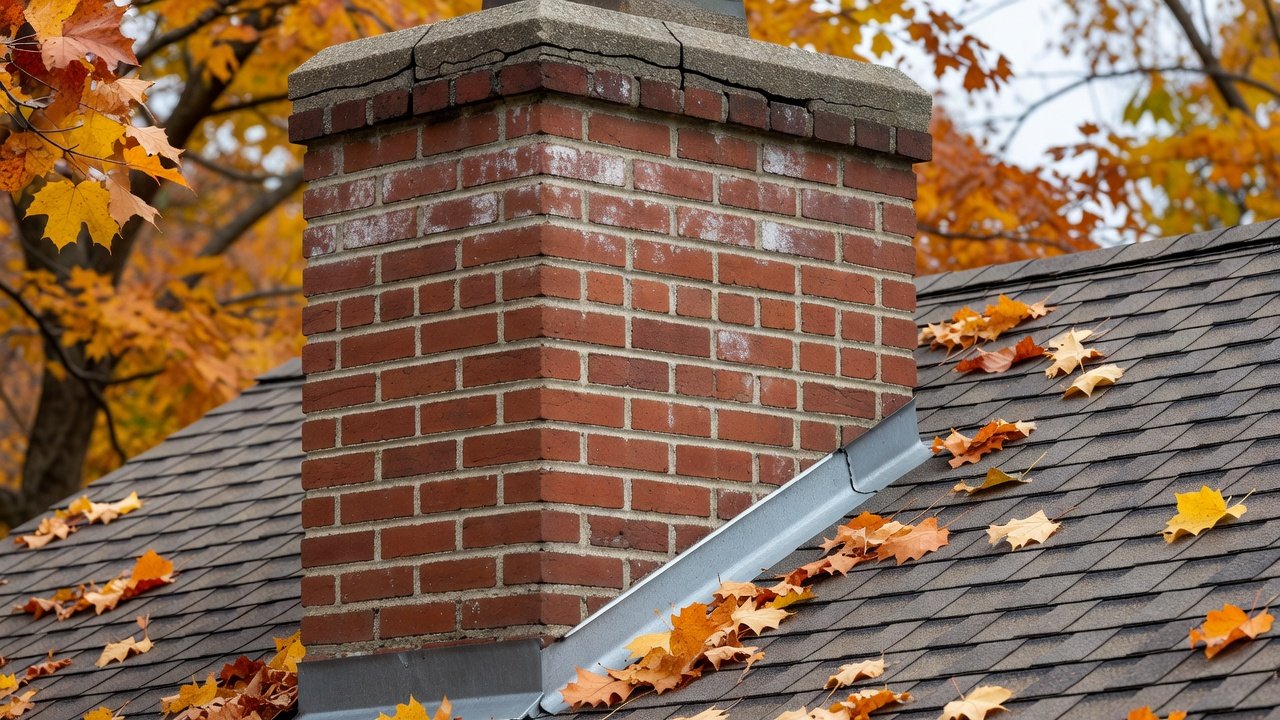
The crown is the concrete or mortar slab that seals the top of the chimney stack around the flue liner. If you can see hairline cracks or larger fractures from the ground, water is already getting in. Crowns are relatively inexpensive to repair or replace when addressed early. Neglected, a cracked crown allows water to undermine the entire top section of the chimney. Call a pro now.
Flashing That Has Lifted, Rusted, or Separated
The flashing is the metal seal where your chimney meets the roofline. Look for rust staining on the roof surface near the chimney, lifted edges, or visible gaps between the flashing and the brick. Failing flashing is one of the most common entry points for water into both the chimney system and the attic structure below. We frequently find this issue on older homes in Locust Valley, NY and Oyster Bay, NY, where the salt-laden coastal air accelerates metal corrosion faster than it does inland. Call a pro now.
A Strong Smoky or Musty Smell Without a Fire Burning
If your fireplace smells like an ashtray or damp wood in the summer — when the system hasn’t been used in months — you likely have one of two problems: creosote buildup that needs sweeping, or a draft issue allowing outside air and odors to push down into the home. According to the Chimney Safety Institute of America, creosote accumulates in three stages, with third-degree glazed creosote being the most dangerous and the primary fuel source in chimney fires. A persistent smell is a reason to schedule our chimney inspection service before the heating season opens. Call a pro now.
Smoke Entering the Room When the Damper Is Open
A properly functioning fireplace draws combustion gases up and out. If smoke rolls back into the room when you open the damper and light a fire, the flue may be blocked, the liner may be damaged, or there’s a draft problem caused by a structural issue. The NFPA’s NFPA 211 standard specifies three levels of chimney inspection, with a Level 2 inspection — including video scanning required after any chimney event. Persistent backdrafting qualifies. Don’t use the fireplace again until a technician has assessed it. Call a pro now.
Loose or Fallen Brick Near the Firebox or Hearth
If a brick or chunk of mortar has dropped into your firebox, or you notice the interior firebox wall feels soft or has visible gaps, the refractory materials are failing. This is a fire containment issue, not just a cosmetic one. The Insurance Institute for Business and Home Safety notes that chimney fires can reach internal temperatures exceeding 2,000°F enough to crack flue liners and ignite surrounding structural materials in minutes. A compromised firebox needs professional assessment before another fire is lit. Call a pro now.
Staining on Interior Walls or Ceilings Near the Chimney
Yellow-brown staining on drywall or plaster adjacent to the chimney chase is almost always water intrusion. By the time it shows up on your interior surfaces, the moisture has already traveled through the masonry. This is typically a more involved repair involving the crown, flashing, or liner — and it only gets more expensive if the affected drywall develops mold. Keep a close eye on it, but get an inspection within 30 days.
It Has Been More Than a Year Since Your Last Inspection
This one isn’t dramatic, but it’s the easiest to act on. According to the Chimney Safety Institute of America, chimneys, fireplaces, and vents should be inspected at least once a year and cleaned as necessary. If you can’t remember the last time a technician looked at your system, that’s the sign. An annual inspection catches every item on this list before it compounds. Schedule it before October — after that, our fall backlog fills up fast.
The Cost of Waiting: What Changes Between August and December
Timing matters in ways that go beyond availability. Crown sealant and repointing materials cure better in moderate temperatures. Scheduling chimney repair in Tenafly, NJ or anywhere else in our service area during late summer or early fall means our technicians can complete exterior masonry work in optimal conditions, with proper cure times before the first hard freeze. Schedule the same job in November and we’re working against shorter days, lower temperatures, and a calendar that’s already compressed by every other homeowner who waited.
For context: a simple crown repair in 2026 typically runs $300 to $600 when addressed in the off-season. The same job compounded by a freeze-thaw cycle that has expanded those cracks and pushed water into the upper courses can run $1,200 to $2,500 or more once brick replacement and repointing are added. We’re not in the business of inflating urgency, but those numbers are real and we quote them honestly to every homeowner in Cresskill, NJ and Demarest, NJ who asks us what waiting costs them.
If you recognize any of the signs above — especially the ones flagged as “call a pro now” — reach out through our website contact form for a free estimate. We serve Roslyn, NY and the surrounding North Shore communities as well as Tenafly, NJ and the Northern Valley. The best time to get ahead of a chimney problem is before it’s a heating season emergency.
Frequently Asked Questions
How do I know if my chimney needs repair or just cleaning?
Cleaning and repair are different services. Cleaning removes creosote and debris from inside the flue. Repair addresses structural problems: cracked mortar, damaged crowns, failed flashing, deteriorating brick. Many chimneys need both. If you’re seeing any of the exterior signs listed above — white staining, recessed mortar, visible crown cracks — those point to repair, not just a sweep. Our chimney inspection service can identify exactly what your system needs before we recommend any work.
Can I do chimney repointing myself to save money?
Homeowners can handle minor tuck-pointing on low, accessible sections of an exterior wall. On a chimney, we don’t recommend it. The mortar mix matters — standard masonry mortar is often too rigid for chimney applications and causes more cracking over time. Getting the right mix, proper joint depth, and weatherproof finish requires experience. A DIY repoint that fails in one season costs more to redo correctly than the original professional repair would have.
How much does chimney repair typically cost in 2026?
It depends entirely on what needs to be done. Crown sealing runs roughly $300 to $600. Repointing a chimney stack can range from $500 to $1,500 depending on the number of courses affected. Flashing replacement runs $400 to $900 in most cases. Full chimney rebuilds above the roofline start around $3,000. These are honest ranges based on our work in the area — the actual cost for your chimney depends on its current condition, which is why we offer free estimates before any work begins.
Is a Level 2 chimney inspection always required before repairs?
Not always, but it’s often the right starting point. The NFPA 211 standard requires a Level 2 inspection — which includes video scanning of the flue interior — whenever there has been a chimney event, a change in use, or as part of a home sale. If you’ve had any backdrafting, visible damage, or haven’t had an inspection in several years, a Level 2 gives us the full picture before we recommend repair scope. It protects you from both over-spending and under-addressing the problem.
What time of year is best to schedule chimney repair in the Tenafly, NJ and Roslyn, NY area?
Late summer through early fall — roughly July through September is the best window for exterior masonry work. Temperatures are moderate, materials cure properly, and our schedule has more flexibility before the fall rush. We start seeing significant demand increases in October as homeowners realize they want their fireplace ready for winter. By November, turnaround times are longer and some exterior work has to wait for temperature windows. Book early if you know you have an issue.
Does homeowner’s insurance cover chimney repair?
It depends on the cause and your specific policy. Sudden, accidental damage — such as a lightning strike or a tree limb impact — may be covered. Gradual deterioration from lack of maintenance typically is not. Some policies cover water damage if the entry point was a sudden flashing failure rather than long-term neglect. We recommend documenting the condition of your chimney with dated photos and contacting your insurer directly with questions about coverage before assuming either way.
Related from America’s Chimney Experts: Essential Chimney Repair Roslyn, NY · Trusted Chimney Sweep Tenafly, NJ · Honest Chimney Crown Repair Nassau County