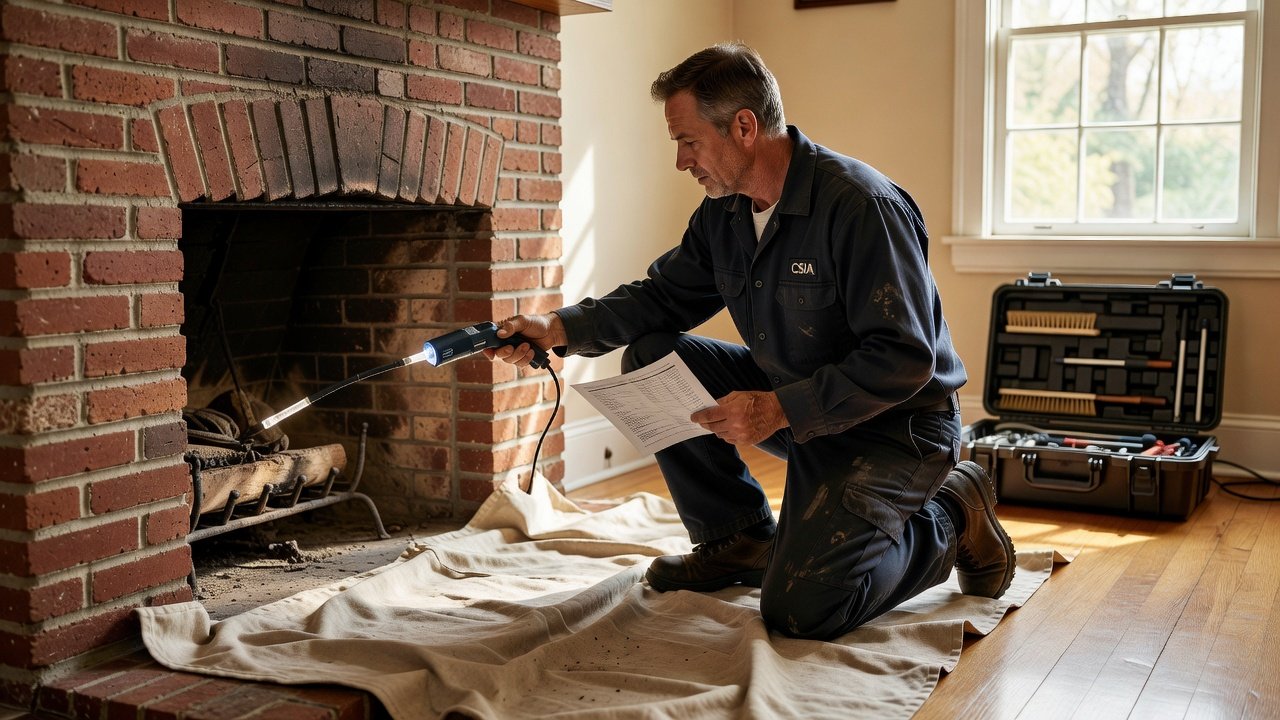
Essential Chimney Sweep Old Brookville, NY: 2026 Guide for Bergenfield, NJ Residents
Most homeowners who call us have already made at least one mistake before we arrive and that’s not a criticism; it’s just the reality of owning a fireplace without much guidance. Whether you’re in Bergenfield, NJ planning to light your first fire of the season or you’ve been burning wood for twenty years in a colonial-era home, the process of hiring and preparing for a chimney sweep in Old Brookville, NY involves more steps than most people expect. Get any of them wrong and you’re either wasting money, creating a safety hazard, or both.
This guide walks you through what to do, in the right order, so you don’t end up on the wrong side of any of those outcomes.
Before You Start: Know What You’re Actually Dealing With
A homeowner in Bergenfield, NJ called us last January after her oil-to-gas conversion had been completed the previous spring. She assumed the chimney was fine the burner company hadn’t flagged anything. When our technicians ran a camera through the flue, we found a clay tile liner that had cracked in two places, likely from years of freeze-thaw cycling combined with the heat differential from the old oil system. She had been running her gas fireplace through December into a compromised flue.
The point: before you schedule anything, know your fuel type, your appliance type, and when the chimney was last swept and inspected. If you can’t answer all three, that becomes the job of step one.
Also pull out your homeowner’s insurance documents. Some policies in Bergen County require documented annual chimney maintenance to maintain coverage for fire-related claims. Check before you assume you’re covered.
Step 1 — Find Out What Level of Service You Actually Need
Not every chimney visit is a sweep. The NFPA’s NFPA 211 standard specifies three levels of chimney inspection, with Level 2 inspections including video scanning required whenever a home is sold or after any chimney event such as a chimney fire. If you bought your Bergenfield home in the last few years and never had a Level 2 done, start there, not with a basic sweep.
A sweep clears combustion deposits. An inspection evaluates structural integrity. You often need both, but confusing the two leads homeowners to book a $99 sweep when what they actually needed was a camera inspection that reveals a liner failure. Ask specifically: “Do you offer Level 2 video inspections, and is that included or separate?”
Step 2 — Vet the Company Before You Book
In Northern New Jersey and the North Shore of Long Island, the chimney service market includes some highly qualified operators and some who show up with a brush and a Shop-Vac and call it done. The difference matters enormously when your flue runs through a 1960s split-level with a clay liner that hasn’t been touched in a decade.
Look for CSIA-certified sweeps. According to the Chimney Safety Institute of America (CSIA), chimneys, fireplaces, and vents should be inspected at least once a year and cleaned as necessary to reduce fire and carbon monoxide hazards and that guidance presumes the person doing the work has been trained to identify what they’re looking at. Certification is the minimum bar, not a bonus.
Ask if the company carries liability insurance and whether their technicians are W-2 employees or subcontractors. For a job inside your home that involves open flues and combustion systems, that distinction has real consequences if something goes wrong.
Step 3 — Book Earlier Than You Think You Need To
Every September, our phones ring constantly from homeowners across Bergenfield, Cresskill, and up into Closter, NJ who waited until the first cold snap to remember their chimney needed service. By mid-October we’re booking three to four weeks out. The best available appointment slots go to customers who called in August.
If you have a wood-burning fireplace or stove, aim to schedule your chimney sweep before the end of August for a fall-ready system. Gas appliance flues are slightly more forgiving on timing, but the same principle applies don’t compete with every other homeowner in Bergen County for the last open slot in October.
Step 4 — Prepare Your Home the Right Way
This step sounds obvious and gets skipped constantly. Clear a three-foot radius around the firebox opening. Remove rugs, decorative items, and anything stored inside the firebox itself we’ve arrived to find decorative logs, candles, and once, a bird’s nest the homeowners hadn’t noticed. Our technicians use drop cloths and a high-efficiency vacuum, but a cluttered work area slows the job and increases the chance of soot reaching surfaces you don’t want it on.
If you have pets that startle or get anxious around strangers or equipment noise, secure them in another room. A nervous dog knocking into equipment near an open flue is nobody’s idea of a smooth service call.
Also: tell us about any recent changes to the appliance or the home. A new insert, a renovated hearth, added insulation near the chase all of it is relevant context that changes what our technicians look for.
Step 5 — Understand What the Sweep Report Should Tell You
At the end of a proper chimney sweep, you should receive a written summary of what was found, what was cleaned, and critically any conditions that require follow-up. If the only thing you’re handed is an invoice, that’s a red flag.
Ask specifically about creosote accumulation. According to the Chimney Safety Institute of America, creosote accumulates in three stages, with third-degree glazed creosote being the most dangerous and the primary fuel source in chimney fires. If our technicians find Stage 2 or Stage 3 buildup, we document it and explain your options which may include a chemical treatment before a mechanical sweep, or a full relining assessment. You deserve that information in writing, not a verbal mention at the door.
Step 6 — Don’t Ignore Carbon Monoxide Risk
This one is not optional. The U.S. Consumer Product Safety Commission (CPSC) estimates that carbon monoxide poisoning from faulty heating systems, including fireplaces and chimneys, sends more than 20,000 people to emergency rooms annually. A cracked flue tile, a blocked damper, or an improperly sized liner can channel CO into living spaces without any visible sign of a problem.
Make sure you have functioning CO detectors on every level of your home, including within 10 feet of sleeping areas, before you run any fireplace or heating appliance this season. If our inspection reveals a draft or venting issue, don’t use the appliance until it’s resolved. This is one area where we don’t hedge.
Step 7 — Plan for What Comes After
A chimney sweep is not a one-and-done event. If you’re burning three or more cords of wood a season which is common in the older homes we service in Bergenfield and over in Englewood, NJ you may need two cleanings per year. Gas appliance flues generally need less frequent cleaning but still require annual inspection.
After your sweep, ask our technicians whether any repairs were flagged that should be addressed before next season. Tuckpointing, damper replacement, or a new stainless liner doesn’t have to happen the same day, but it should be scheduled. Putting it off a year often means a more expensive fix later. Our chimney repair and repointing service and liner relining work can usually be bundled with your sweep appointment when the scope is clear in advance.
Troubleshooting Tip: When Smoke Backs Up After a Recent Sweep
If you light a fire and smoke rolls into the room within a day or two of having your chimney swept, the most common cause is not a bad sweep it’s a cold flue. A flue that hasn’t been used in months holds cold, heavy air that blocks the natural draft. Before your first fire, hold a lit piece of newspaper near the open damper for 30 to 60 seconds to warm the air column. If the problem persists after two or three fires, call us. A persistent backdraft can indicate a damper that’s not opening fully, a flue sized incorrectly for the firebox, or a blockage our technicians missed all of which we want to know about and will come back to assess.
Schedule Your Chimney Sweep with America’s Chimney Experts
We serve homeowners across Bergenfield, Englewood, Cresskill, Closter, and throughout Bergen County, and we bring the same standard of work to every job whether it’s a routine annual sweep or a full liner replacement. If you’re ready to get your chimney ready for the 2026 heating season, reach out through the contact form on our website and we’ll get you on the schedule before the fall rush hits.
Frequently Asked Questions About Chimney Sweep Old Brookville, NY
How often should I have my chimney swept in Bergenfield, NJ?
For wood-burning fireplaces used regularly through the heating season, we recommend a sweep once a year at minimum more often if you’re burning more than two or three cords annually. Gas appliance flues need annual inspection even if sweeping is less frequent. The CSIA’s guidance is clear: once a year for inspection, cleaned as necessary based on what’s found.
What does a chimney sweep typically cost in Bergen County in 2026?
Basic sweeps for a single flue generally run between $150 and $250 in our service area, depending on flue height, accessibility, and creosote level. A combined sweep and Level 2 camera inspection runs higher typically $300 to $450. Any company offering a $69 “special” without seeing the chimney first is almost certainly upcharging you at the door. Get the scope in writing before you book.
Do I need a chimney inspection if I never use my fireplace?
Yes. Unused flues can develop blockages from animal nesting, deteriorating mortar, or moisture intrusion none of which are visible without an inspection. If you’re in a home you recently purchased or haven’t used the fireplace in several years, a Level 2 inspection is the right starting point regardless of how often the fireplace runs.
Can I sweep my own chimney to save money?
You can purchase brush kits, but most homeowners who try it either miss creosote buildup they can’t see without a camera, create a significant soot mess without proper containment equipment, or both. Beyond the cleaning itself, a DIY sweep gives you no assessment of structural conditions cracked tiles, failing mortar joints, or damper problems that a trained technician would catch. The savings rarely hold up when you factor in what gets missed.
What’s the difference between a chimney sweep and a chimney inspection?
A sweep is a cleaning service removing soot, creosote, and debris from the flue. An inspection is a structural and safety assessment, which at Level 2 includes video camera scanning of the interior flue walls. Many companies bundle a basic visual inspection with a sweep, but that’s not the same as a Level 2. If you’re buying or selling a home, or if there’s been any chimney event like a fire or unusual smell, NFPA 211 requires a Level 2.
How long does a chimney sweep appointment take?
A standard single-flue sweep with a basic visual check typically takes 45 minutes to an hour. Add a Level 2 video inspection and you’re looking at 90 minutes to two hours. Multi-flue homes, heavily sooted systems, or any situation where we find something worth investigating in detail will run longer. We’d rather take the time to do it right than rush a job that directly affects your family’s safety.
Related from America’s Chimney Experts: Honest Chimney Sweep Near Me Greenvale · Essential Chimney Repair Roslyn, NY
Pingback: Essential Chimney Sweep Englewood Cliffs, NJ Warning Signs: 2026 Guide for Demarest, NJ Residents – America's Chimney Experts