Essential Chimney Sweep Englewood Cliffs, NJ Warning Signs: 2026 Guide for Demarest, NJ Residents
Most homeowners call us after something goes wrong a smoky living room, a strange smell that won’t leave, or a repair bill that turned out to be three times what a routine chimney sweep Englewood Cliffs, NJ and surrounding Northern Valley towns would have cost in the first place. We’ve seen this pattern dozens of times in Demarest, NJ alone. The warning signs were sitting right there for weeks, sometimes months, and nobody acted on them.
We’re not writing this to scare anyone. We’re writing it because the signs of a chimney in trouble are almost always visible, audible, or smellable before anything serious happens and knowing what to look for is the difference between a $200 cleaning and a $4,000 liner replacement.
A Call We Got from Demarest Last Winter
A homeowner on a wooded street in Demarest, NJ reached out to us in January 2026. She’d noticed a faint smoky odor in the upstairs hallway every time she used the fireplace, but she’d been telling herself it was probably just drafts. By the time we arrived, we found a partially blocked flue, a cracked clay tile liner, and third-degree creosote deposits that had built up over what looked like four or five uncleaned seasons. The fireplace had been used all autumn. According to the Chimney Safety Institute of America, creosote accumulates in three stages, with third-degree glazed creosote being the most dangerous and the primary fuel source in chimney fires and that’s exactly what we pulled out of her flue. The full repair ran significantly more than it would have if she’d called us at the first smell. She told us she wished she’d known what to watch for.
Here’s what she and every homeowner in Demarest, Cresskill, Alpine, or Englewood Cliffs — should know.
Warning Signs That Mean You Need a Chimney Sweep Now
1. A Smoky Smell Inside the House — Even When the Fireplace Is Cold
This is the one people explain away the most. If your home smells like a campfire and there’s no fire burning, that odor is coming from creosote deposits or debris inside the flue being disturbed by air movement. It means the chimney is dirty and potentially obstructed. Don’t wait. Call a pro.
2. Black Staining Around the Fireplace Opening or on the Firebox Wall
Smoke should travel up and out. If you’re seeing soot streaks fanning out from the fireplace opening onto your wall or mantel surround, the draft is failing. That failure forces combustion gases including carbon monoxide back into the room. The U.S. Consumer Product Safety Commission estimates that carbon monoxide poisoning from faulty heating systems, including fireplaces and chimneys, sends more than 20,000 people to emergency rooms annually. Black staining is a visible sign that those gases may not be exiting safely. Call a pro.
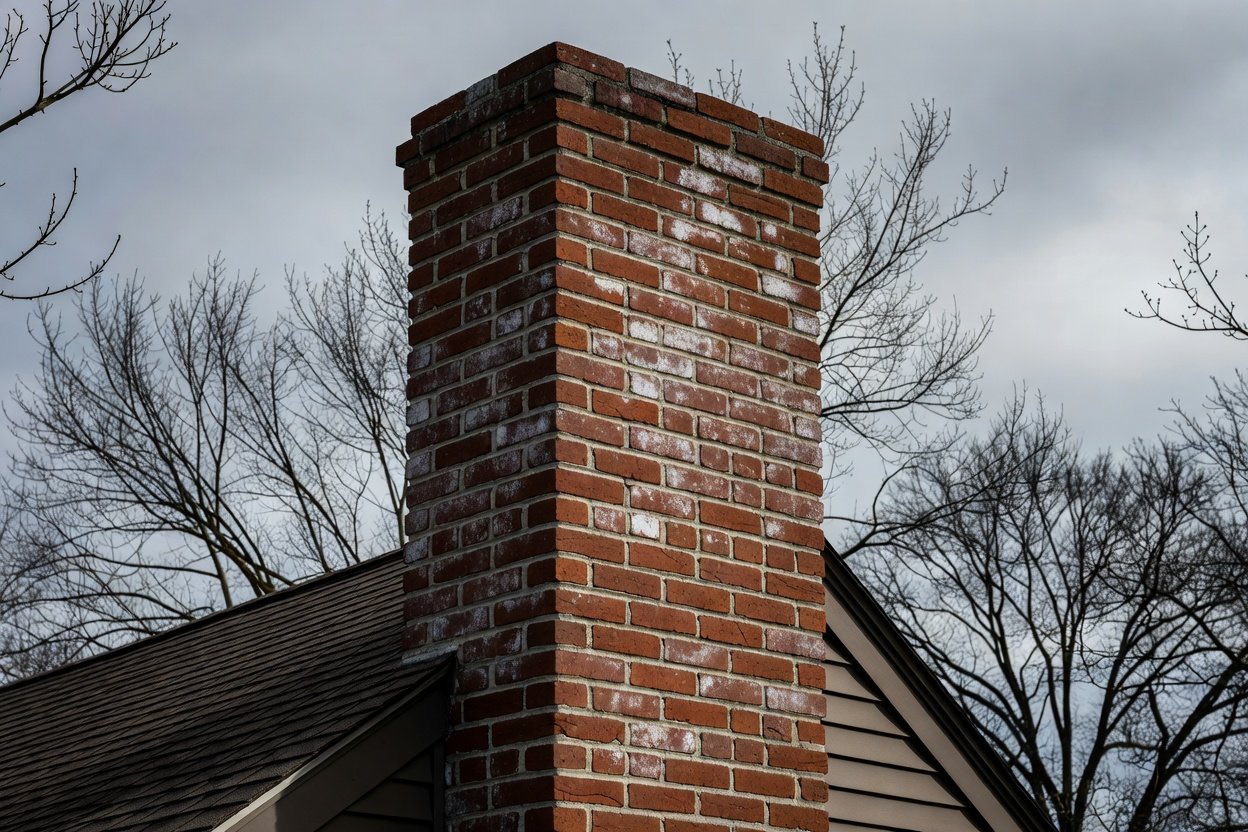
3. White Staining (Efflorescence) on the Outside of the Chimney
The chalky white residue you sometimes see on brick chimneys is mineral salt being carried to the surface by water moving through the masonry. In Northern Valley towns like Demarest and Closter, freeze-thaw cycles through winter and early spring accelerate this process. Efflorescence by itself is a keep-an-eye-on-it sign, but if you’re seeing it alongside spalling brick or crumbling mortar joints, it’s time to schedule a sweep and inspection together the water infiltration is already doing structural damage.
4. Visible Damage to the Mortar Joints or Brick Face
Stand back and look at your chimney from the yard. Gaps in the mortar, bricks that look like they’re shifting, or pieces of masonry on the roof or in the gutters mean the structure is compromised. Gaps in the mortar also let water into the flue, which accelerates liner deterioration. This is a call-a-pro-now situation, not something to photograph and revisit in spring.
5. A Rumbling or Popping Sound During a Fire
A well-burning fire should sound like a fire steady, with occasional crackles from the wood. A rumbling or low roar from inside the flue, or sudden sharp popping sounds from the chimney chase itself, can indicate a chimney fire already in progress. The Insurance Institute for Business and Home Safety notes that chimney fires can reach internal temperatures exceeding 2,000°F, enough to crack flue liners and ignite surrounding structural materials in as little as minutes. If you hear that sound, extinguish the fire and call emergency services, then call us. This is not a wait-and-see situation under any circumstances.
6. Animals or Debris Falling Into the Firebox
Twigs, leaves, nesting material, or the unmistakable sound of something moving inside the flue all point to a missing or damaged chimney cap. We find this regularly in homes across Demarest and neighboring Glen Cove, NY mature tree cover means nesting season brings starlings and squirrels into unprotected flues. A blocked or partially blocked flue from nesting material is a carbon monoxide hazard. Call a pro and ask about cap installation at the same appointment.
7. The Damper Is Rusted, Warped, or Won’t Seal Completely
Run your hand around the damper frame when the fireplace is cold. If you feel cold air coming through even with the damper closed, or if the handle moves but the plate doesn’t seat properly, you have two problems: energy loss in winter and a pathway for outside air along with pests and moisture into the firebox year-round. A warped damper can also indicate past heat exposure from a small chimney fire you may not have noticed. Keep an eye on it if it’s stiff but sealing; call a pro if it isn’t sealing at all.
8. It’s Been More Than a Year Since the Last Cleaning
This one isn’t dramatic, but it matters. According to the National Fire Protection Association, failure to clean chimneys is the leading contributing factor in home heating fires, accounting for 30% of all such fires. The CSIA recommends that chimneys, fireplaces, and vents be inspected at least once a year and cleaned as necessary. If you can’t remember when the last cleaning was, that’s your answer. Schedule a chimney sweep Englewood Cliffs, NJ area homeowners can count on before the next burning season begins and that means booking now, before fall backlogs hit.
What a Cleaning Actually Costs in 2026 and What Ignoring It Costs
A standard chimney sweep in the Northern Valley and North Shore area runs roughly $150 to $250 for a straightforward cleaning with a visual inspection. Add a camera inspection and you’re typically in the $300 to $400 range. Those numbers sound different when you compare them to liner replacement, which commonly runs $2,500 to $5,000 or more depending on flue height and liner type a cost we see homeowners face every season when small problems are left to compound.
Our technicians serve Demarest, Cresskill, Englewood Cliffs, Alpine, and the broader Northern Valley region. We also work across the water on the North Shore of Long Island Greenvale, Roslyn, Glen Cove, Locust Valley so we know exactly what coastal and inland winters do to masonry over time.
Talk to Our Team Before It Becomes a Bigger Problem
If you recognized even two or three of the signs above, don’t sit on it. Our team is ready to do a thorough chimney sweep and if anything turns up during the sweep walk you through your options honestly, without pressure. We also offer chimney inspection services including video camera scanning, masonry repair and repointing, and flue liner installation if it gets to that point.
Reach out through our website contact form to request a free estimate. We’ll get back to you quickly and get you on the schedule before the next heating season is fully underway.
Frequently Asked Questions: Chimney Sweep Englewood Cliffs, NJ and Demarest, NJ
How often should I have my chimney swept in Demarest, NJ?
The Chimney Safety Institute of America recommends at least one inspection per year, with cleaning as needed. In practice, if you’re burning wood regularly through a Northern New Jersey winter October through March annual cleaning before or after the heating season is the baseline. Heavier use means more frequent cleaning.
What does a chimney sweep actually do during a visit?
Our technicians remove creosote and soot buildup from the flue using rotary brushes and professional vacuum equipment. We also inspect the firebox, damper, smoke chamber, and visible portions of the liner for damage. If we have concerns, we’ll recommend a camera inspection to see the full interior of the flue.
Is the smoky smell in my house dangerous, or just unpleasant?
Both. A smoky odor from a cold fireplace means combustion byproducts including carbon monoxide are not fully venting. Carbon monoxide is colorless, odorless, and deadly at high concentrations. The smell of smoke is a signal that the system needs attention; the carbon monoxide that may accompany it does not always give you any warning at all. Don’t dismiss it.
Do I need a chimney sweep if I only use my fireplace a few times a year?
Infrequent use still produces creosote, and a chimney that sits unused for long stretches is more likely to develop animal nesting, moisture damage, or a deteriorated damper. The NFPA and CSIA both recommend annual inspection regardless of usage frequency.
What’s the difference between a Level 1 and Level 2 inspection?
Under NFPA 211, a Level 1 inspection covers the readily accessible portions of the chimney interior and exterior the standard check during a routine sweep. A Level 2 inspection includes video scanning of the flue interior and is required whenever a home changes ownership or after any significant event like a chimney fire or severe storm. If you’re buying a home in Englewood Cliffs, Demarest, or anywhere in Bergen County, insist on a Level 2 before closing.
How do I know if I had a chimney fire and didn’t realize it?
Small chimney fires often go unnoticed by the homeowner. Signs include a honeycomb or blistered appearance on the creosote deposits inside the flue, warped or discolored metal components, and cracked or missing sections of flue tile. If you noticed your fire burning unusually hot or heard rumbling from the chimney during a burn, have it inspected before using the fireplace again.
Related from America’s Chimney Experts: Essential Chimney Sweep Old Brookville, NY · Trusted Chimney Sweep Tenafly, NJ