What Chimney Cleaning Nassau County NY Actually Costs and What Gets the Price Wrong
Roughly one in three home heating fires traces back to a chimney that was never cleaned. That single statistic from the National Fire Protection Association should settle most debates about whether annual chimney cleaning is optional, but it rarely does, because a layer of misinformation about cost and necessity keeps homeowners in Nassau County and beyond from booking the service until something goes wrong.
We do chimney cleaning Nassau County NY homeowners rely on every season, and we also serve the Northern Valley communities in New Jersey, including Cresskill, NJ and the surrounding Bergen County towns. From both sides of the state line, we hear the same handful of misconceptions repeated year after year. This post is our attempt to set the record straight plainly, and without scare tactics.
The “It’s Just a Quick Sweep” Assumption
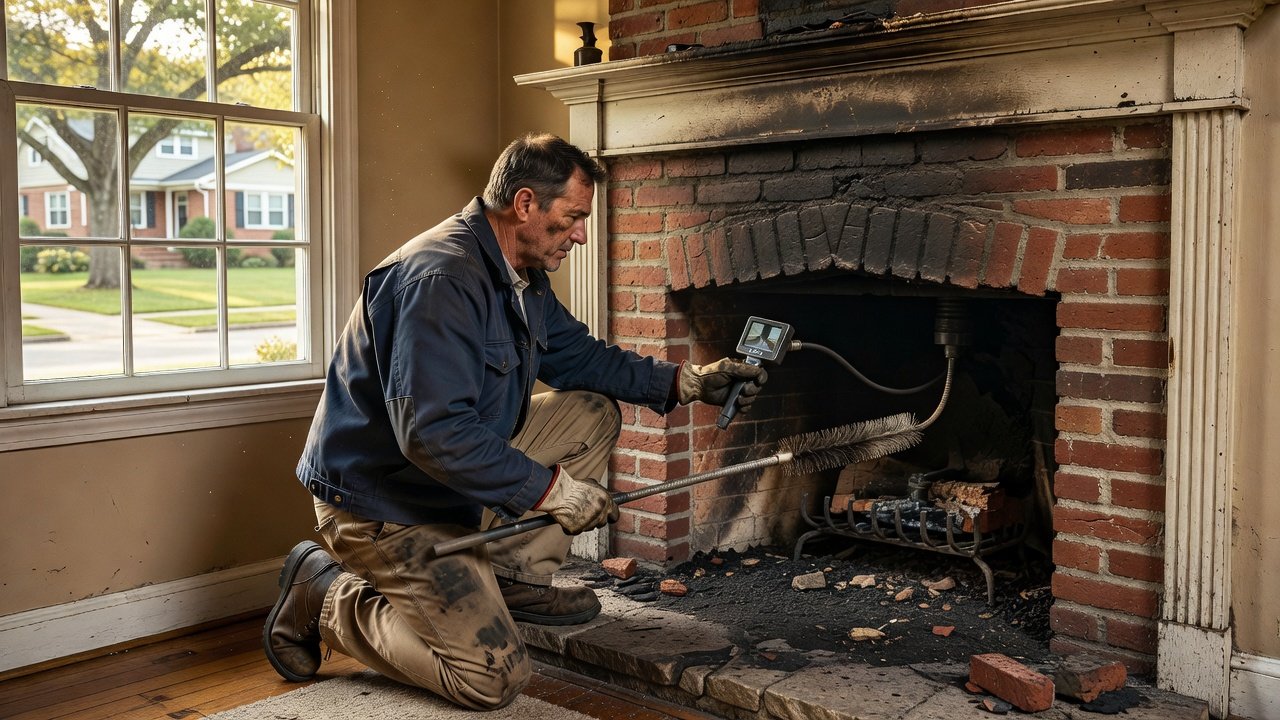
A homeowner in Cresskill, NJ called us in late January 2026. She had bought a 1960s colonial the previous spring, used the fireplace through December, and assumed the single $79 sweep she’d seen advertised online would cover everything. When our technician arrived and ran a camera up the flue, he found third-degree glazed creosote the hard, tar-like buildup that resists a standard brush entirely coating the upper third of the liner. The sweep alone wasn’t going to touch it. She needed a chemical treatment first, followed by a thorough cleaning, and a follow-up camera inspection to confirm clearance. Her final bill was closer to $340.
This is where the “it costs $79” idea breaks down. That price point exists in the market, and for a lightly used fireplace with minimal buildup, a basic Level 1 sweep can genuinely land near the lower end of the range. But the actual cost of chimney cleaning Nassau County NY homeowners should expect depends almost entirely on the condition of the flue going in. Creosote accumulation, animal nesting, damaged liner tiles, or a long period without any maintenance all push the price upward not because a company is padding the bill, but because the work genuinely takes longer and requires different tools.
Why “I Only Use It on Weekends” Doesn’t Change Much
One of the most persistent ideas we encounter in Greenvale, NY, in Locust Valley, NY, and equally in the Bergen County communities we serve is that light use means light buildup, and light buildup means you can skip a year or two. The logic sounds reasonable. It isn’t.
Creosote forms whenever wood smoke cools against the walls of a flue before it exits. A slow, smoldering fire in a fireplace that’s only lit on weekends can actually deposit creosote faster per burn than a roaring fire in a frequently used system, because the lower flue temperatures accelerate condensation. According to the Chimney Safety Institute of America, creosote accumulates in three stages, with third-degree glazed creosote being the most dangerous and the primary fuel source in chimney fires. Getting to that third stage doesn’t require heavy use it requires inattention over time.
The practical cost consequence: the longer the interval between cleanings, the more likely you are to arrive at a job that exceeds a basic sweep. A homeowner who skips two or three seasons and then calls us isn’t saving money over that period they’re deferring a larger bill.
The Belief That a Visual Check Is Enough
Another cost-related misconception is that a homeowner looking up from the firebox, or a handyman shining a flashlight into the flue, can judge whether a chimney needs professional cleaning. We understand why people try this. But the flue on a typical Nassau County home especially the older brick construction common in neighborhoods like Sea Cliff, NY and Glen Cove, NY is rarely straight, and the sections most prone to creosote buildup and liner cracking are the ones no amount of squinting from below will reveal.
The NFPA’s NFPA 211 standard specifies three levels of chimney inspection, with a Level 2 inspection including video scanning required whenever a home is sold or after any significant chimney event such as a chimney fire. A camera inspection is not an upsell; it’s how a technician actually knows what they’re dealing with before cleaning starts. Skipping it can mean a sweep that looks complete but misses the section of liner that’s already compromised.
For homeowners who want a reliable baseline cost, budgeting $175 to $350 for a standard cleaning with a camera inspection in 2026 is realistic for most Nassau County properties. Jobs involving heavy creosote treatment, liner repair, or animal removal will run higher $400 to $600 or more is not unusual for a neglected system.
Thinking Carbon Monoxide Risk Only Applies to Gas Appliances
Some wood-burning fireplace owners assume carbon monoxide is a gas-furnace problem, not theirs. In our experience, this belief leads people to deprioritize cleaning and inspection on their wood systems. The U.S. Consumer Product Safety Commission estimates that carbon monoxide poisoning from faulty heating systems including fireplaces and chimneys sends more than 20,000 people to emergency rooms annually. A blocked or deteriorating flue on a wood-burning fireplace can push CO back into the living space just as effectively as a cracked heat exchanger on a furnace.
The homes we service in Closter, NJ and Demarest, NJ often have both a wood-burning fireplace and a gas heating appliance venting through the same chimney structure or sharing a common chase. In those configurations, the risk compounds quickly if annual cleaning and inspection aren’t maintained for both systems.
The Idea That Any Chimney Company Charges the Same
Price shopping makes sense, but the assumption that chimney cleaning Nassau County NY quotes are interchangeable is worth examining carefully. A company offering a flat $89 sweep may be doing exactly that sweeping without a camera, without a written condition report, and without liability if they miss something. That isn’t always the case, but it’s worth asking what the quote includes before comparing numbers.
Our chimney inspection service includes a documented assessment of flue condition, liner integrity, and firebox components. When we quote a cleaning, the homeowner knows what’s covered and what a follow-up repair would involve and why. That transparency matters, especially for older homes where deferred maintenance can turn a straightforward cleaning into a more involved repair if problems aren’t caught early.
If you’re in Nassau County or the Northern Valley communities of New Jersey and you’d like a straight answer about what your chimney actually needs and what it will cost reach out through our website, contact form. We’re happy to give you an honest assessment before any work begins.
Frequently Asked Questions About Chimney Cleaning Nassau County NY
How much does chimney cleaning in Nassau County NY typically cost in 2026?
For most homes with moderate use and no major buildup, a professional cleaning including a camera inspection runs between $175 and $350. Heavier creosote deposits, animal nesting, or liner damage push costs higher sometimes into the $400 to $600 range. The condition of your flue going in is the single biggest price driver.
How often should a Nassau County homeowner have their chimney cleaned?
The Chimney Safety Institute of America recommends that chimneys, fireplaces, and vents be inspected at least once a year and cleaned as necessary to reduce fire and carbon monoxide hazards. For most households burning wood regularly through the winter, annual cleaning aligns with that guidance.
Does a gas fireplace in Nassau County need chimney cleaning too?
Yes. Gas appliances produce fewer combustion byproducts than wood, but the flue can still accumulate moisture damage, blockages from birds or debris, and deteriorating liner material. An annual inspection is appropriate for gas systems even if full cleaning is needed less frequently.
What is Level 1 versus Level 2 chimney inspection, and which do I need?
A Level 1 inspection is a visual check of accessible portions of the chimney appropriate for a system in continuous service with no known changes. A Level 2 inspection includes video scanning of the flue interior and is required by NFPA 211 when a home changes ownership or after a chimney fire. If you’ve recently bought a home or haven’t had an inspection in several years, Level 2 is the right starting point.
Can I clean my own chimney to save money?
Brush kits are sold for DIY use, but they only address surface-level soot on accessible sections of straight flues. They cannot detect liner cracks, blockages, or third-degree creosote and they provide no documentation of condition. The savings are modest; the risk of missing a real problem is not.
What makes creosote removal cost more than a standard sweep?
Third-degree glazed creosote is hardened and chemically bonded to the liner surface. It cannot be dislodged with brushes alone. It requires a chemical treatment applied before cleaning, a waiting period, and then a thorough second pass adding time, materials, and labor to the job. That’s why the condition of your flue matters more than the number of times you’ve used the fireplace.
Related from America’s Chimney Experts: Chimney Sweep Services in Greenvale, NY · What Chimney Waterproofing Greenvale NY Actually Costs · Honest Chimney Crown Repair Nassau County