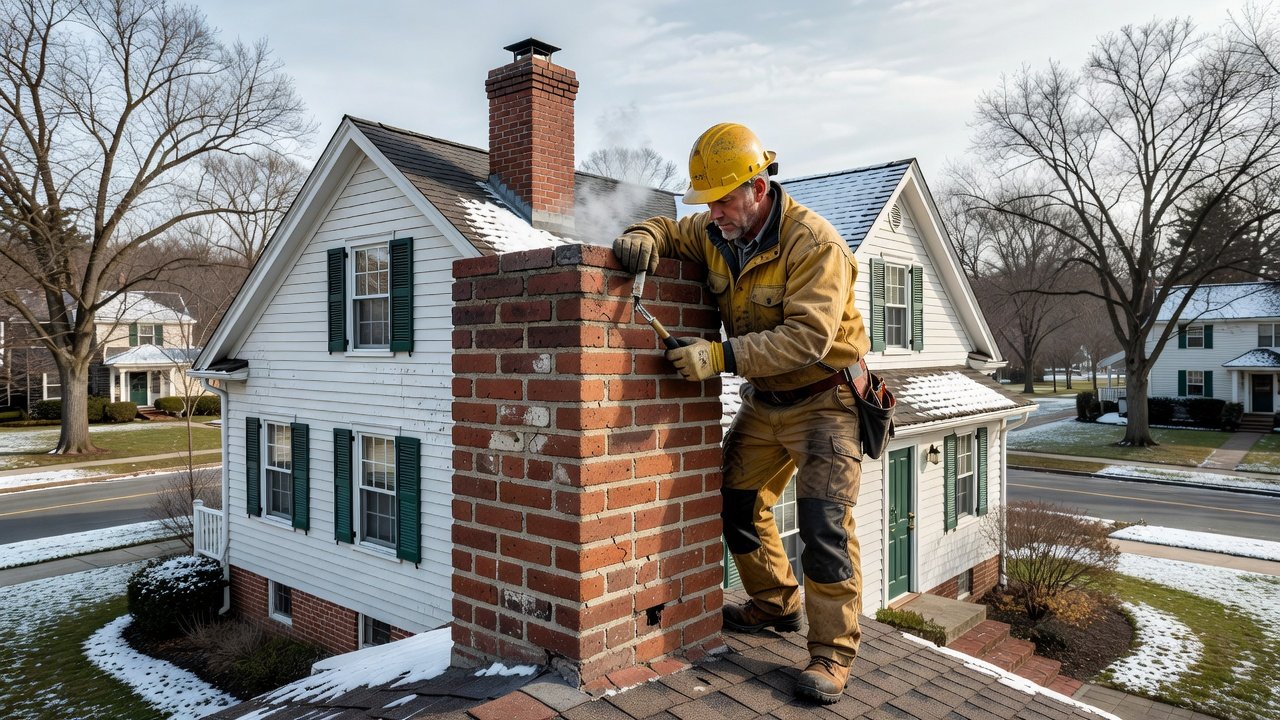
Smart Choices for Chimney Repair Greenvale, NY: 2026 Guide for Muttontown Residents
Grab a flashlight and lean into your firebox for thirty seconds. What you see or smell will tell you more about the state of your chimney than most homeowners ever bother to check. For residents across Muttontown, NY and the surrounding Nassau County area, that quick look can be the difference between a simple seasonal fix and a repair bill that makes your stomach drop. This guide on chimney repair Greenvale, NY lays out, honestly, what you can handle yourself and what genuinely needs a licensed professional and why.
A Muttontown Homeowner Who Got It Half Right
Last February, a homeowner in Muttontown, NY called us after noticing white staining on the exterior of their chimney and some crumbling mortar between the bricks just above the roofline. They had already bought a bag of pre-mixed mortar from a hardware store and patched the most visible gaps themselves not a bad instinct, honestly. The problem was that they had not identified why the mortar had failed in the first place. When our technicians got up there with a camera, we found that the flashing had separated at the step joints, water had been tracking behind the brick for at least two seasons, and two courses of brick near the crown were fully saturated. The DIY patch was cosmetically fine but would have failed again by April. We repaired the flashing, rebuilt the crown, treated the masonry, and their system has been solid through the rest of this winter. The takeaway is not that the homeowner did something wrong it is that they did not yet have the full picture.
What a Capable Homeowner Can Safely Do
We are not in the business of telling people they need us for everything. There are real tasks a reasonably handy homeowner can manage without compromising safety or voiding anything.
Cleaning the firebox floor and smoke shelf. Ash buildup below the damper is a maintenance item, not a technical job. Use a metal ash bucket, a small shovel, and a stiff brush. Wait 72 hours after your last fire so no embers are live.
Replacing a basic damper handle or throat damper. If the damper pivot has rusted and the replacement part is a direct match, this is a manageable weekend task for someone comfortable working in a tight space. Take photos before you remove anything.
Applying chimney waterproofing sealant. Vapor-permeable masonry sealants not standard paint can be brush- or spray-applied to clean, dry brick. If your chimney exterior is in good structural condition and you can safely access it, this is a legitimate DIY task. Do not use standard exterior paint; it traps moisture and accelerates spalling.
Monitoring and documenting changes. This sounds simple, but it matters. Photograph your chimney crown, your mortar joints, and your flashing connection every fall. Year-over-year photos tell a story that makes every professional inspection faster and more accurate.
Where You Need to Call a Professional and Why It Is Not Just a Sales Pitch
The honest reason most chimney repair work requires a professional is not certification theater. It is access, diagnostics, and consequence. Here is where the line sits.
Mortar repointing and crown repair. Repointing looks straightforward until you realize that the wrong mortar mix too hard relative to the brick causes brick faces to spall off within a few years. Historic brick in older Muttontown and Old Brookville homes is often softer than modern brick and needs a lime-based mortar matched to the original. Getting this wrong causes more damage than the original failure. Beyond mix selection, proper repointing requires grinding out the deteriorated joint to a consistent depth before packing new mortar in layers, which takes equipment and time most homeowners do not have.
Flashing repair and replacement. Step flashing, counter flashing, and saddle flashing at the chimney-roof junction are the single most common source of water intrusion we see across the North Shore. Sealing over failed flashing with caulk buys a season at best. Correct repair means pulling back roofing material, setting new metal properly, and integrating it with the waterproofing layer. Done wrong, you get interior water damage that your homeowner’s policy may not cover if the repair method is deemed improper.
Liner repair and relining. The Chimney Safety Institute of America (CSIA) recommends that chimneys, fireplaces, and vents be inspected at least once a year and cleaned as necessary to reduce fire and carbon monoxide hazards. The liner is the reason that guidance exists a cracked or deteriorated liner allows combustion gases and heat to reach structural framing. The U.S. Consumer Product Safety Commission (CPSC) estimates that carbon monoxide poisoning from faulty heating systems, including fireplaces and chimneys, sends more than 20,000 people to emergency rooms annually. No DIY kit addresses a failed liner safely or in compliance with NFPA 211, which governs liner specifications and clearances.
Any repair following a chimney fire or event. According to the NFPA’s NFPA 211 standard, a Level 2 inspection including video scanning is required after any chimney event such as a chimney fire. If you have had a significant fire, a hard puff-back, or a lightning strike, the structure needs professional evaluation before the fireplace is used again. This is not optional from a code standpoint, and it affects your insurance position.
What the Repair Actually Involves, Start to Finish
When homeowners from Glen Head, NY or Locust Valley, NY contact us for chimney repair, we walk through the same sequence every time. First, a thorough visual inspection from the ground, then on the roof, then inside the firebox with a camera. We document everything before we recommend anything. Repair scope gets confirmed with the homeowner before any work begins no surprises.
For a typical repointing job on a two-story home, expect our crew to spend half a day on the roof with an angle grinder, pointing tools, and properly mixed mortar. The mortar needs to cure before we apply any sealant, which usually means a return visit or a same-day check if conditions cooperate. Crown rebuilds add a few hours. Relining with a stainless steel flexible liner on a standard flue takes most of a full day including the connection at the appliance end.
Cost in 2026 for the greater Greenvale area runs roughly $300–$600 for moderate repointing, $800–$1,800 for crown repair and rebuild, and $2,500–$4,500 for full liner installation depending on flue height and configuration. These are honest ranges, not minimums designed to get us in the door.
The Real Cost of Getting It Wrong
We see the downstream damage regularly in Sea Cliff, NY, in Cresskill, NJ, across the North Shore. A homeowner applies the wrong mortar, it fails in two freeze-thaw cycles, and now the underlying brick needs replacement too. Or someone seals a liner crack with a hardware store product not rated for continuous flue temperatures, and the next inspection reveals it has broken down and deposited debris in the flue. The Insurance Institute for Business and Home Safety notes that chimney fires can reach internal temperatures exceeding 2,000°F, enough to crack flue liners and ignite surrounding structural materials in as little as minutes. That context matters when you are weighing whether to hire a pro or patch it yourself.
If you are not sure where your situation falls, start with our chimney inspection service. A camera inspection gives you the full picture before you spend a dollar on materials.
Talk to Us Before You Decide
Our technicians work across Muttontown, Greenvale, and the wider Nassau County area year-round. If you have questions about what your chimney actually needs or want a second opinion on a scope you have already been quoted reach out through the contact form on our website. We will give you a straight answer, and a free estimate on any repair work.
Frequently Asked Questions: Chimney Repair Greenvale, NY
How do I know if my chimney mortar needs repointing or a full rebuild?
Repointing is appropriate when the brick itself is structurally sound but the mortar joints have eroded or cracked. A full rebuild is necessary when brick faces are spalling, entire courses have shifted, or the structure is leaning. A camera inspection and hands-on probe will tell you which situation you are in do not rely on a ground-level look alone.
Can I use hydraulic cement or standard exterior caulk to patch chimney cracks?
Neither product is suitable for chimney masonry repair. Hydraulic cement expands when it cures and can crack surrounding brick. Standard caulk degrades rapidly at flue temperatures and is not vapor-permeable, so it traps moisture. Use products specifically rated for chimney masonry or call a professional for anything beyond cosmetic surface sealing.
How often do chimneys in Muttontown, NY need repair versus just cleaning?
In our experience across Nassau County, most wood-burning fireplaces that see regular use need minor repair work every five to eight years typically mortar touch-up, crown sealant reapplication, or flashing adjustment. The coastal freeze-thaw cycle on Long Island accelerates mortar deterioration compared to inland climates, so annual inspections are the only reliable way to catch small issues before they compound.
Does chimney repair require a permit in Nassau County?
Minor repairs like repointing and crown patching generally do not require a permit in Nassau County. However, structural rebuilds, liner replacements, and any work that changes the chimney’s configuration typically do require a permit and must meet local building code. We handle the permit process for jobs that require it.
Will my homeowner’s insurance cover chimney repair?
Coverage depends on cause. Sudden, accidental damage such as a chimney fire or storm impact is often covered, subject to your deductible. Gradual deterioration from deferred maintenance is almost universally excluded. Documenting your annual inspections and keeping records of any repair work strengthens any future claim.
What is the difference between a Level 1 and Level 2 chimney inspection before repair?
A Level 1 inspection covers accessible portions of the chimney firebox, visible flue sections, and exterior and is appropriate for routine annual checks. A Level 2 inspection includes video scanning of the full flue interior and is required under NFPA 211 whenever a chimney event has occurred, or significant repair work is being planned. For any repair beyond minor repointing, we recommend a Level 2, so the repair scope reflects the actual condition of the entire system.
Related from America’s Chimney Experts: Don’t Wait Until Winter · Essential Chimney Repair Roslyn, NY · What Chimney Waterproofing Greenvale NY Actually Costs
Pingback: Hiring the Right Chimney Sweep Roslyn, NY: 2026 Guide for Brookville, NY Residents – America's Chimney Experts