
Published November 5, 2026
Warning Signs You Need a Chimney Sweep in Tenafly, NJ Before Next Season
Tenafly’s older housing stock, much of it built between the 1940s and 1970s, means a lot of original masonry fireplaces that have never had a professional chimney sweep. If your fireplace has been sitting quiet through the warmer months and you’re planning to light it again soon, some of what you’re about to read may already be happening in your home right now.
Knowing when to call for a chimney sweep in Tenafly, NJ is straightforward once you know what to look for. Below are the specific signs, what each one actually means, and whether it needs immediate attention or just monitoring.
A Situation That Usually Brings People to Us
A homeowner in Tenafly called us last October after noticing a sharp, smoky odor drifting through the living room on warm afternoons. The fireplace hadn’t been used in two years. When our technicians ran a camera inspection, they found third-degree glazed creosote coating the upper flue and a partial blockage from a deteriorated damper plate. The homeowner had no idea either condition existed. We completed a chimney sweep and damper repair before the first frost. That sequence, smell first, then discovery, then repair, is one of the most common scenarios we see across the Northern Valley.
Specific Warning Signs to Watch For
1. A tar or smoky odor when the fireplace is not in use
If you can smell your chimney on a warm day without a fire burning, creosote deposits are almost certainly the cause. According to the Chimney Safety Institute of America, creosote accumulates in three stages, with third-degree glazed creosote being the most dangerous and the primary fuel source in chimney fires. That odor is not cosmetic. Call a pro now.
2. Black, oily staining around the firebox opening
Staining on the front face of your fireplace, or on the damper frame, points to heavy buildup inside the flue. When creosote saturates the interior walls, it migrates outward. This is a direct signal that your last chimney sweep was either too long ago or never happened. Call a pro now.
3. Smoke backing into the room when you light a fire
Occasional smoke on startup is normal for thirty seconds or so. If smoke continues to spill into the room after that, something is blocking airflow. It could be creosote buildup, a closed or broken damper, or an animal nest. The National Fire Protection Association notes that failure to clean chimneys is the leading contributing factor in home heating fires, accounting for 30 percent of all such fires. Call a pro now.
4. Visible white or gray staining on the exterior masonry
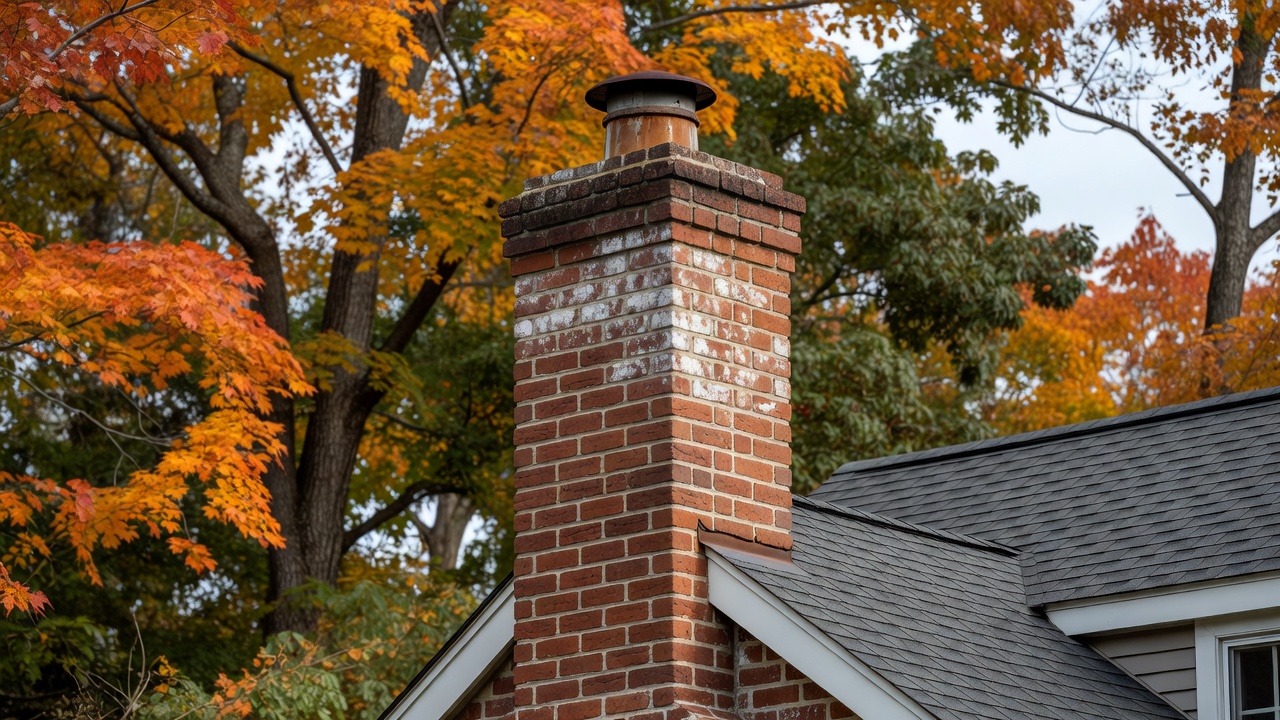
This is called efflorescence, and it means water is moving through the brick or mortar. In Northern New Jersey’s freeze-thaw winters, that moisture expands and contracts repeatedly, cracking mortar joints from the inside out. We see this regularly on chimneys in Cresskill and Demarest, as well as throughout Tenafly. Left alone, it leads to spalling brick and structural failure. Keep an eye on it, and schedule a masonry inspection before it accelerates.
5. Flaking or chunks of tile inside the firebox
If you’re finding small gray or terracotta fragments on the floor of your firebox, pieces of your flue liner are breaking apart. The NFPA’s NFPA 211 standard specifies that a Level 2 inspection, including video scanning, is required after any chimney event such as a chimney fire. Many homeowners don’t realize they’ve had a minor chimney fire until they find debris like this. Call a pro now and ask about our chimney liner inspection service.
6. A loud cracking or popping sound during a fire
Some ticking from metal components is normal as they expand. A sharp, sustained cracking sound from the flue area is not. It often means a liner tile has fractured or mortar joints inside the flue are giving way under heat stress. Call a pro now.
7. Animals or debris falling into the firebox
If you’ve heard scratching, seen nesting material, or found a bird or squirrel inside the firebox, your chimney cap is either missing or damaged. Beyond the obvious inconvenience, animal nests are a fire hazard and block combustion gases from venting properly. We see this in older homes in Closter and Alpine as well as throughout Tenafly. Call a pro now.
8. Rust on the damper or firebox
Rust means moisture has been getting in. A rusted damper often won’t seal properly, which lets cold air in during winter and humid air in during summer, both of which accelerate creosote condensation and masonry decay. Keep an eye on it in the short term, but schedule a chimney sweep and damper check before the next heating season.
9. No record of a chimney sweep in the last twelve months
The Chimney Safety Institute of America recommends that chimneys, fireplaces, and vents be inspected at least once a year and cleaned as necessary. If you’ve bought a home in Tenafly recently and don’t have documentation of a recent inspection, treat that as a warning sign in itself. You don’t know what the previous owner burned or how often. Call a pro now starting with our chimney inspection service to establish a baseline.
What Separates a Qualified Chimney Sweep from the Rest
Not every company offering a chimney sweep in Tenafly, NJ carries the same qualifications. When you’re evaluating contractors, ask whether the technicians hold CSIA Certified Chimney Sweep credentials, whether the company carries liability insurance and workers’ compensation, and whether they provide a written inspection report after the visit. Any company that quotes a price over the phone without asking about your fireplace type, liner material, or last service date is guessing. A contractor who discourages a camera inspection is worth questioning, since reputable sweeps use video to document conditions before and after the work.
Red flags include unusually low flat-rate offers with vague scope, pressure to approve expensive repairs on the spot without written estimates, and no physical business address or verifiable local history.
Schedule Before the Season, Not After the Problem
Homeowners across Bergen County tend to call us in October and November, once temperatures drop and fireplaces become a priority again. Slots fill up quickly at that point. If any of the signs above apply to your home, reaching out now means you get the appointment you want, not whatever is left. Contact America’s Chimney Experts through our website contact form to request a free estimate and get on the schedule before the fall rush.
Frequently Asked Questions: Chimney Sweep in Tenafly, NJ
How often should I schedule a chimney sweep in Tenafly, NJ?
The Chimney Safety Institute of America recommends at least one inspection per year, with cleaning performed as needed based on use. If you burn wood regularly from October through March, an annual chimney sweep before the heating season is the standard approach. If you use a gas fireplace, annual inspections still apply even though gas produces less creosote.
What does a chimney sweep actually include?
A professional chimney sweep covers the removal of creosote and soot from the firebox, smoke chamber, and flue, along with an inspection of the damper, liner, and crown. Many sweeps also include a visual check of the exterior cap and masonry. Our technicians document conditions with photos before and after the cleaning.
How much does a chimney sweep cost in Tenafly, NJ?
Pricing varies based on flue height, liner type, and how much buildup is present. A standard sweep and Level 1 inspection in Northern New Jersey typically runs between $150 and $300. If a Level 2 camera inspection is needed, or if repairs are identified, costs will differ. We provide written estimates before any work begins.
What is a Level 2 inspection and when do I need one?
NFPA 211 requires a Level 2 inspection whenever a home changes ownership or after any chimney event, including a suspected chimney fire. It involves a video scan of the full flue interior. If you’ve recently purchased a home in Tenafly or found liner debris in your firebox, a Level 2 inspection through our chimney inspection service is the right starting point.
Can I use my fireplace if I haven’t had a chimney sweep recently?
The U.S. Consumer Product Safety Commission estimates that carbon monoxide poisoning from faulty heating systems, including fireplaces and chimneys, sends more than 20,000 people to emergency rooms annually. Using an uninspected fireplace carries real risk. If it has been more than a year since your last chimney sweep, we recommend having an inspection before you light another fire.
How do I know if I had a chimney fire without realizing it?
Minor chimney fires often go unnoticed at the time. Signs after the fact include flue tile fragments in the firebox, a cracked or discolored flue liner visible through the damper opening, a warped damper, and a strong acrid odor. If any of these apply, schedule a Level 2 inspection before using the fireplace again.
Serving your area: For related services in nearby communities, see Chimney Experts in Scarsdale and Garden City Chimney Service.
Related from America’s Chimney Experts: Chimney Sweep in Greenvale, NY