
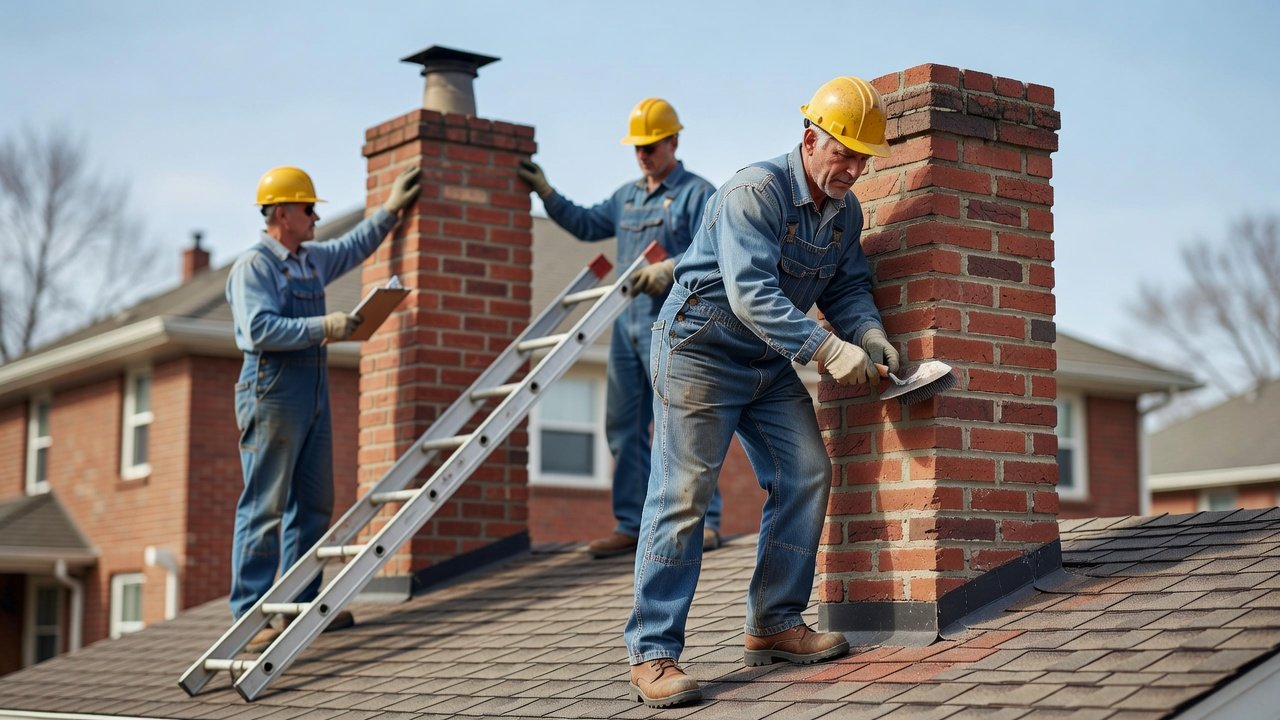
Essential Chimney Repair Roslyn, NY: 2026 Guide for Bergenfield, NJ Residents
A cracked flue liner or crumbling mortar doesn’t announce itself it waits until the first cold snap of the season, then makes itself known in the worst possible way. For homeowners across the North Shore and Northern Valley, understanding what chimney repair Roslyn, NY actually involves and how to hire someone who knows what they’re doing can be the difference between a safe heating season and a house fire. We’ve seen both outcomes, and we’d prefer you experience only the first one.
Our technicians work across Nassau County and Bergen County regularly, and the masonry and flue problems we diagnose follow predictable patterns. The houses are often older, the winters are damp, and the freeze-thaw cycles along the coast are punishing. What changes from job to job isn’t the physics it’s the contractor standing in front of the homeowner.
A Call from Bergenfield That Became a Two-Day Job
A homeowner in Bergenfield, NJ contacted us in February 2025 after noticing a white powdery stain spreading down the exterior of their chimney efflorescence, as it turned out, which signals that water has been penetrating the masonry and carrying dissolved salts to the surface. They’d already had two other companies look at it. The first applied a surface sealant and collected a check. The second recommended a full rebuild without performing a camera inspection first. Neither diagnosis was correct.
We ran a Level 2 video inspection which, per NFPA 211, is the appropriate standard whenever a chimney has experienced a significant event or shows signs of structural compromise and found a failed crown, two cracked mortar joints at the shoulder, and a hairline fracture in the clay tile liner near the smoke chamber. The repair required crown reconstruction, targeted repointing, and a stainless-steel liner section to bridge the fractured tile. Total turnaround: two days on site. The homeowner hadn’t lost their chimney; they’d lost time trusting the wrong people first.
Six Problems We Diagnose Regularly and How We Actually Fix Them
Spalling Brick and Failed Mortar Joints
Symptom: brick faces flaking off, chunks of mortar on the roofline or in the firebox. Cause: water intrusion followed by freeze-thaw expansion. This is endemic to older brick homes from Roslyn through Bergenfield and across into Glen Cove, NY, where the coastal humidity accelerates the cycle. The fix is repointing grinding out the deteriorated mortar to a minimum depth of three-quarters of an inch and packing in type-S or type-N mortar matched to the original joint profile. Surface-only patching doesn’t hold through a Bergen County winter. Can it be prevented? A properly applied vapor-permeable masonry sealer, reapplied every five to eight years, dramatically slows the process.
Cracked or Deteriorated Flue Liner
Symptom: smoke backing into the home, visible cracks in the flue tiles during inspection, or a persistent burning smell even when the fireplace is cold. Cause: thermal shock from sustained high-temperature fires, or a chimney fire the homeowner may not have known occurred. According to the Insurance Institute for Business and Home Safety, chimney fires can reach internal temperatures exceeding 2,000°F — enough to fracture clay tile liners in a single event. The fix depends on severity: hairline cracks in isolated sections may be addressed with a stainless steel liner sleeve; widespread liner failure typically requires a full stainless steel relining. This is not a surface repair.
Failed Chimney Crown
Symptom: visible cracking across the top of the chimney, water staining inside the firebox, or efflorescence on the exterior stack. Cause: a crown poured too thin, without a drip edge, or using the wrong mortar mix. Many crowns we see on homes in Roslyn, Englewood, NJ, and Oyster Bay, NY were installed adequately for 1980s building standards but simply haven’t held up. The fix is crown reconstruction removal of the old crown, forming a new one with a proper overhang and flexible sealant at the flue collar, using a mix rated for exterior exposure.
Damaged or Missing Chimney Cap
Symptom: water in the firebox after rain, animal nesting material visible during inspection, or accelerated liner deterioration. Cause: the original cap has rusted through, blown off, or was never installed. This one is straightforward to diagnose and fix a stainless steel or copper cap matched to the flue dimensions. What’s not straightforward is what gets missed when a tech stops there: we always check the liner below when a cap has been absent for a season or more, because nesting debris can create blockage and concentrated moisture damage.
Firebox and Smoke Chamber Deterioration
Symptom: crumbling firebrick, mortar joint loss inside the firebox, or visible corbeling damage in the smoke chamber. Cause: thermal cycling and — very commonly — improper fuels burned over years. The fix for firebox joints is refractory mortar, not standard masonry mortar; they require different heat tolerances entirely. Smoke chamber repairs often involve parge-coating with a refractory compound to restore the corbeled walls to a smooth, NFPA 211-compliant surface. According to the Chimney Safety Institute of America, creosote accumulates more aggressively in rough or damaged smoke chamber surfaces, compounding the hazard.
Flashing Failure at the Roof Line
Symptom: water staining on the ceiling near the chimney, or visible gaps between the flashing and the chimney masonry. Cause: step flashing and counter-flashing work as a system; when the caulk fails or the counter-flashing pulls away from the mortar joint, water channels directly into the roof deck. We see this regularly on homes in Cresskill, NJ and Sea Cliff, NY, where older rooflines and original lead or aluminum flashing have simply reached the end of their service life. The fix is reflashing — not recaulking over a failed joint.
Choosing the Right Contractor: What to Ask, What to Watch For
The Bergenfield homeowner we mentioned earlier had paid for work that didn’t address the actual problem. That’s a story we hear several times a season. Here’s our honest advice on vetting a chimney contractor before signing anything.
Ask whether the technician holds CSIA Certified Chimney Sweep credentials. The CSIA certifies individuals, not companies — so ask to see the individual tech’s certification, not just a company logo on a business card. Ask whether they’ll perform a Level 2 video inspection before recommending major repairs. Any contractor who quotes a full rebuild or relining without camera documentation of the liner condition is guessing at your expense.
Red flags we see regularly: quotes given over the phone without a site visit; pressure to sign same-day for a “discount”; no written scope of work specifying materials and methods; proposals that reference “chimney cleaning” as the primary fix for structural problems. The U.S. Consumer Product Safety Commission estimates that carbon monoxide poisoning from faulty heating systems sends more than 20,000 people to emergency rooms annually — a properly scoped repair, done by a credentialed technician, is a safety issue, not a home improvement luxury.
Get at least two written estimates. Make sure both reference the same scope. If one contractor’s proposal is vague about liner material gauge, flashing method, or mortar type, that vagueness will cost you later.
What This Work Costs in 2026
Repointing a full chimney on a two-story home in the Bergenfield and Roslyn area runs roughly $800 to $2,500 depending on brick condition and accessibility. Crown reconstruction typically falls between $400 and $900. A full stainless steel liner installation — including the liner, insulation wrap, and top and bottom termination components — generally runs $2,000 to $4,500 for a standard single-story flue. These are real-world ranges, not lowball estimates used to get you in the door.
According to the National Fire Protection Association, failure to clean and maintain chimneys is the leading contributing factor in home heating fires, accounting for 30% of all such fires. Deferred repair consistently costs more than timely repair — both in dollars and in risk.
Schedule Your Inspection with America’s Chimney Experts
Our team serves Bergenfield, Roslyn, and the wider North Shore and Northern Valley region. If your chimney is showing any of the symptoms described above or if it simply hasn’t been inspected in the last twelve months we’d encourage you to reach out before the heating season is underway. We offer free estimates, and our technicians will give you a straight diagnosis before recommending any work. Contact us through the website form to schedule a visit.
Frequently Asked Questions About Chimney Repair in Roslyn, NY
How do I know if my chimney needs repair or just a cleaning?
Cleaning removes soot and creosote buildup; repair addresses structural problems. Some symptoms — smoke backing into the house, for instance can stem from either issue. A proper Level 1 or Level 2 inspection will distinguish between them. We don’t recommend repair work until we’ve confirmed the cause through direct visual or camera inspection.
What does chimney repair Roslyn, NY typically cost in 2026?
It depends heavily on what needs fixing. Minor repointing can run under $1,000; a full liner replacement on a two-story home may reach $4,500 or more. A diagnostic inspection first prevents you from spending money on the wrong repair. We provide written, itemized estimates before any work begins.
Is chimney repair urgent if I only use the fireplace occasionally?
Yes, and in some cases more so. Infrequent use doesn’t slow moisture intrusion, freeze-thaw cracking, or liner deterioration. A cracked liner poses a carbon monoxide risk regardless of how often you light a fire. The CSIA recommends annual inspections for all chimneys, including those used lightly.
Do I need a permit for chimney repair in Nassau County or Bergen County?
Cosmetic repointing and crown repair generally don’t require permits. Structural repairs, liner replacement, or work that alters the chimney’s height or configuration typically does require a permit in both Nassau County and Bergen County municipalities. We’ll advise you on permit requirements as part of our estimate process.
How long does a typical chimney repair take?
Most single-issue repairs a crown, a cap replacement, targeted repointing are completed in one visit. More involved work like full repointing or liner replacement typically takes one to two days on site. We give homeowners a realistic timeline in writing before we start.
What are the red flags that a chimney contractor isn’t legitimate?
No written scope of work, quotes over the phone without an inspection, same-day pressure tactics, and inability to provide individual CSIA certification numbers are the most common warning signs. A reputable contractor will inspect before they quote, explain their diagnostic reasoning, and put the full scope in writing.
Related from America’s Chimney Experts: Honest Chimney Crown Repair Nassau County · What Chimney Waterproofing Greenvale NY Actually Costs
Pingback: Trusted Chimney Sweep Tenafly, NJ: 2026 Guide for Glen Head, NY Residents – America's Chimney Experts
Pingback: Essential Chimney Repair Tenafly, NJ: 2026 Guide for Roslyn, NY Residents – America's Chimney Experts
Pingback: Smart Choices for Chimney Repair Greenvale, NY: 2026 Guide for Muttontown Residents – America's Chimney Experts
Pingback: Essential Chimney Sweep Old Brookville, NY: 2026 Guide for Bergenfield, NJ Residents – America's Chimney Experts