Don’t Wait Until Winter: Chimney Liner Installation Greenvale NY — 2026 Guide for Tenafly, NJ Residents
Most homeowners don’t think about chimney liner installation until the first cold snap hits and by then, the window for safe, well-scheduled work has already closed. If you’re heating your home this season and haven’t had your liner inspected or replaced, you may be burning fires over a cracked, deteriorated, or completely absent liner. That’s not a minor oversight. That’s a genuine fire and carbon monoxide hazard, and it’s more common in homes across Tenafly, NJ and the surrounding area than most people realize.
This guide breaks down exactly when to schedule chimney liner installation and what the cost of waiting looks like in real terms.
A Call We Got Last January from Tenafly
A homeowner in Tenafly, NJ called us in early January after noticing a persistent smoky smell in their living room every time they used the fireplace. They’d assumed it was a draft issue. When our technicians ran a camera inspection, we found a clay tile liner that had fractured in at least four places almost certainly from repeated freeze-thaw cycles over several New Jersey winters. The cracks were exposing the surrounding masonry to combustion gases and heat. They’d been running fires all December without knowing it.
We installed a new stainless steel liner before the end of the month. The smoky smell was gone immediately. But the more sobering part of that conversation was learning that this family had a carbon monoxide detector that wasn’t working. Had they not called when they did, the outcome could have been far worse.
According to the U.S. Consumer Product Safety Commission (CPSC), carbon monoxide poisoning from faulty heating systems, including fireplaces and chimneys, sends more than 20,000 people to emergency rooms annually. A damaged liner is one of the most direct paths to that outcome.
Why the Liner Is the Part That Cannot Fail
The flue liner does three things: it contains combustion gases so they vent safely out of the home, it protects the surrounding masonry from heat and corrosion, and it provides the correctly sized channel that keeps your fire burning efficiently. Without an intact liner, every fire you light pushes superheated gases and carbon monoxide into the walls of your home.
According to the Chimney Safety Institute of America (CSIA), chimneys, fireplaces, and vents should be inspected at least once a year and cleaned as necessary to reduce fire and carbon monoxide hazards. That annual inspection is often the only way a homeowner finds out their liner is compromised because you can’t see most of the damage from the firebox opening.
The NFPA’s NFPA 211 standard specifies three levels of chimney inspection, with a Level 2 inspection including video scanning required whenever a home is sold or after any chimney event such as a chimney fire. If you bought your Tenafly home without a Level 2 inspection, or if you’ve had any unusual performance from your fireplace or heating appliance, a camera inspection should come before anything else.
The Seasonal Breakdown: When to Act and When You’ve Already Waited Too Long
Late Summer — The Ideal Window (July Through August)
This is honestly the best time to schedule chimney liner installation in the Tenafly and greater Northern Valley area. Demand is low, our schedule is flexible, and the weather makes the work cleaner and faster. Mortar cures better in dry summer heat. Stainless steel liner systems can be measured, ordered, and installed without the rush that comes once September hits. If you’ve been putting this off, a call in late summer is the single best move you can make.
Early Fall — Still Workable, But Book Early (September Through October)
September is when the phone starts ringing in earnest. Homeowners throughout Tenafly, Demarest, Closter, and Cresskill are all thinking about the same thing at the same time — getting the fireplace ready before it gets cold. We can still accommodate liner installations in early fall, but scheduling fills up fast. If you’re waiting to see whether October is warm or cold before you commit, you’re gambling with the calendar.
This is also when we often find the most urgent cases: homeowners who had a Level 1 inspection in September that revealed liner damage serious enough to require replacement before any fires are lit. Those jobs need to be turned around quickly, which puts pressure on everyone. Book early if you can.
November Through December — High Risk, High Demand
By the time Thanksgiving arrives, we’re booked out further than most homeowners expect. We do everything we can to fit urgent jobs in, but a chimney liner installation completed in December is being done under time pressure which is never the best condition for careful masonry work. Worse, if your home in Tenafly or nearby Englewood has a heating appliance connected to the chimney (a gas furnace or boiler venting through the flue, for instance), a failed liner during peak heating season isn’t just uncomfortable. It’s dangerous.
The Insurance Institute for Business and Home Safety notes that chimney fires can reach internal temperatures exceeding 2,000°F — enough to crack flue liners and ignite surrounding structural materials in minutes. A cracked liner burning through December and January is not something to manage around. It’s something to fix.
January Through March — Emergency Territory
Mid-winter installations happen, and we do them. But the freeze-thaw cycle that affects homes in Tenafly, Alpine, and across Bergen County is the same force that damages liners in the first place. Mortar joints and liner seams are under stress throughout the winter. Scheduling a new liner installation in January or February means working around weather delays and curing time restrictions. It’s doable — but it costs more and takes longer. The homeowner from our January scenario above got lucky that we had a cancellation. Don’t count on that.
Spring — Second Best Window, Often Overlooked
Once the heating season winds down in March and April, most homeowners stop thinking about their chimney entirely. That’s exactly why spring is an underrated time to schedule. Our technicians have more flexibility, lead times on liner materials are shorter, and the inspection that often precedes a liner installation can be scheduled and completed within a week or two. Homeowners in Old Brookville, NY and Sea Cliff, NY who heat with wood through the winter often find their liner is in worse shape than expected by the time spring arrives. Getting ahead of it then means being ready well before fall.
What Happens If You Wait Too Long
A liner that’s cracked or deteriorated doesn’t hold steady it gets worse. Each fire pushes thermal stress further into existing fractures. Salt air from the Long Island Sound accelerates corrosion on any exposed metal. And because most of the liner is invisible without a camera, there’s no visual cue telling you it’s gotten worse. You’re flying blind until something happens a chimney fire, a CO alarm, or a real estate inspector flagging it during a home sale and requiring a repair before closing.
At that point, you’re no longer scheduling on your terms. You’re reacting, paying more, and hoping there’s a slot available.
What the Work Actually Involves
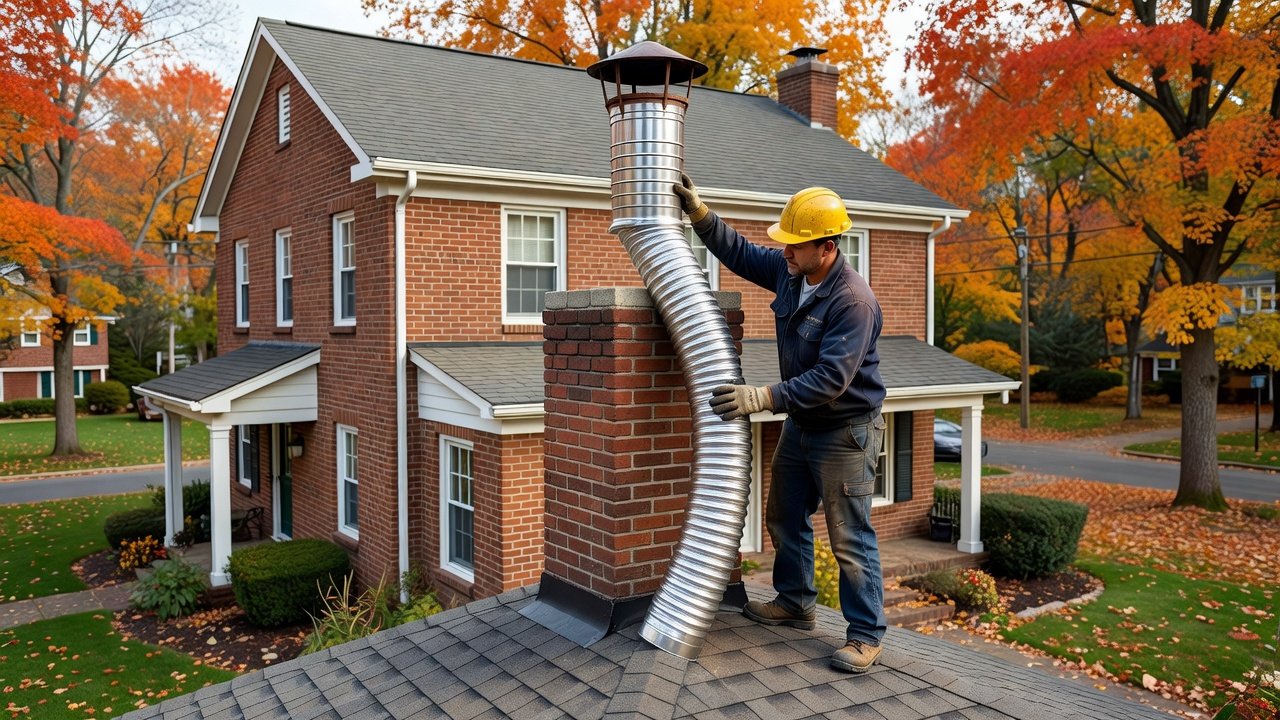
For most homes in the Tenafly area, a chimney liner installation means removing the old clay tile sections or damaged metal liner, sizing and fitting a new stainless steel flexible or rigid liner system, and sealing the top with a properly fitted rain cap and anchor plate. For gas appliances, liner sizing is governed by the appliance’s BTU rating and flue height. For wood-burning fireplaces, we size to the firebox opening using NFPA 211 guidelines. The job typically takes one day for a straightforward installation. More complex situations — multi-story homes, offset flues — may take longer.
We often pair liner installation with our chimney inspection service and chimney sweeping so everything is handled in a single visit. If the exterior masonry needs attention, our repair and repointing work can be scheduled alongside it.
Get on the Schedule Before the Rush
If your home in Tenafly, NJ is due for a liner inspection or you already know replacement is on the table, the best thing you can do right now is reach out before demand peaks. We serve homeowners throughout the Northern Valley and the North Shore and we give every job a straight assessment, no upselling, no scare tactics. Use the contact form on our website to request a free estimate and we’ll get you scheduled as soon as possible.
Frequently Asked Questions: Chimney Liner Installation in Tenafly, NJ
How do I know if I need a chimney liner installation?
The most reliable way is a camera inspection, which allows our technicians to see the full length of the flue. Common signs that point to liner damage include smoky odors inside the home when the fireplace is in use, visible cracks or spalling around the firebox, or a history of chimney fires. If your home is more than 20–25 years old and the liner has never been inspected, that alone is sufficient reason to schedule one.
How long does chimney liner installation take?
For most single-story or two-story homes in Tenafly, a stainless-steel liner installation takes one full working day. Homes with longer or more complex flue runs offset sections, multiple appliances sharing a flue may require additional time. We’ll give you a clear timeline before we start.
What type of liner is best for my fireplace?
Stainless steel flexible liner systems are the most versatile and durable option for both wood-burning fireplaces and gas appliances. The grade of steel 304 or 316 alloy depends on what fuel you’re burning. We size every liner to the specific appliance and flue height per NFPA 211 guidelines, so you’re never getting a one-size-fits-all answer from us.
What does chimney liner installation cost in the Tenafly, NJ area?
Costs vary depending on the height and complexity of the flue, the liner material, and whether additional work is needed (cap replacement, damper repair, etc.). For a straightforward residential installation in Bergen County, the range is typically $1,500–$3,500. We provide written estimates before any work begins.
Is chimney liner installation required by code?
Yes, in most cases. The NFPA 211 standard requires that all chimneys serving heating appliances have an intact, properly sized liner. Local building codes in New Jersey and New York generally adopt this standard. If you’re selling your home, a home inspector or buyer’s attorney will almost certainly flag a missing or damaged liner.
Can I use my fireplace while I wait for liner installation?
If your liner is confirmed to be cracked, missing, or significantly deteriorated, we strongly advise against it. A damaged liner allows combustion gases including carbon monoxide to enter the living space and can allow heat transfer to combustible structural materials. If there’s any doubt, treat the fireplace as out of service until the liner is replaced.
Related from America’s Chimney Experts: Trusted Chimney Sweep Tenafly, NJ · What Chimney Waterproofing Greenvale NY Actually Costs · Essential Chimney Repair Tenafly, NJ
Pingback: Smart Choices for Chimney Repair Greenvale, NY: 2026 Guide for Muttontown Residents – America's Chimney Experts
Pingback: Hiring the Right Chimney Sweep Roslyn, NY: 2026 Guide for Brookville, NY Residents – America's Chimney Experts